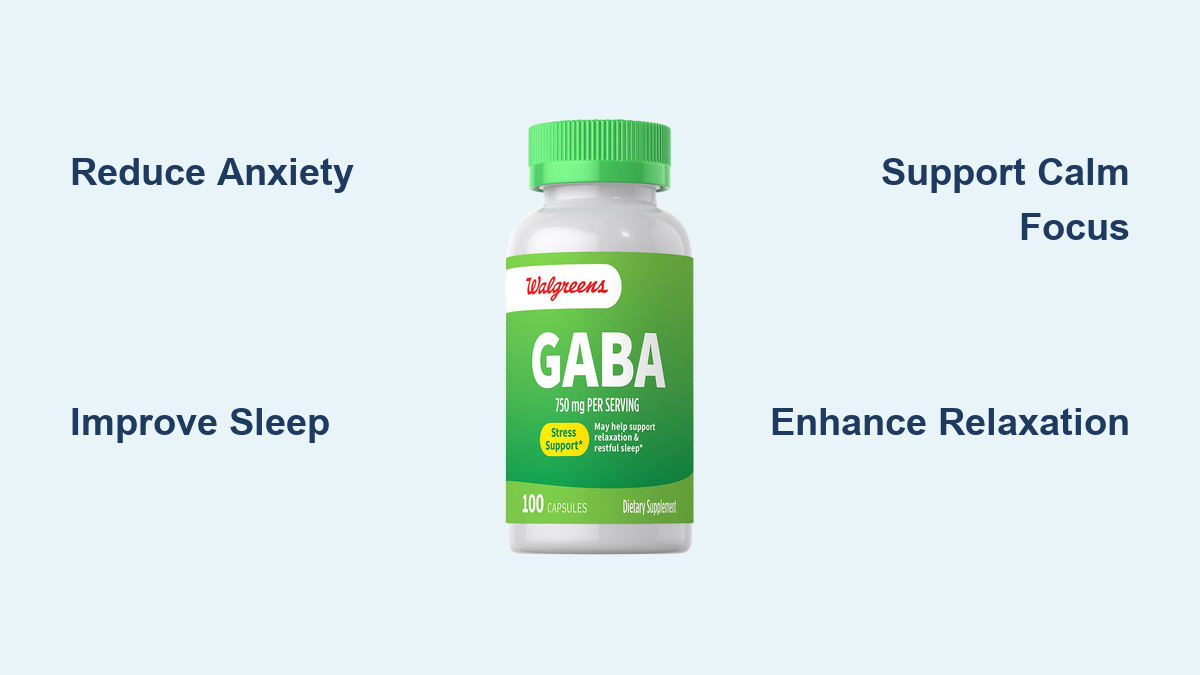

Feeling constantly stressed or struggling with restless nights? You’re not alone. Millions turn to GABA (gamma-aminobutyric acid) supplements seeking natural relief, drawn by its reputation as the brain’s primary calming neurotransmitter. As the main inhibitory chemical messenger in your central nervous system, GABA regulates neuronal activity to help you unwind, manage stress, and achieve deeper sleep. While research on oral GABA supplementation is still evolving, emerging evidence suggests specific benefits that could transform your wellness routine. This guide cuts through the noise to deliver science-backed insights about the real benefits of taking GABA supplements, helping you determine if this popular compound deserves a spot in your daily regimen.
The interest in GABA supplementation stems from its fundamental role in brain function—approximately 60-75% of all synapses in your brain rely on GABA to maintain balance between excitation and inhibition. When GABA levels dip, you might experience heightened anxiety, racing thoughts, or difficulty falling asleep. Unlike prescription medications that enhance GABA activity (and come with dependency risks), natural GABA supplements offer a gentler approach. By the end of this article, you’ll understand exactly how GABA works, which benefits are supported by research, and how to use it effectively for maximum results.
Why Low GABA Levels Cause Anxiety and Sleep Problems
Your brain relies on GABA to put the brakes on overactive neural circuits that trigger stress responses. When GABA binds to receptors in the amygdala—the brain’s fear center—it reduces excessive firing that leads to anxiety symptoms. Without sufficient GABA activity, your nervous system remains stuck in “fight-or-flight” mode, making you feel constantly on edge. Research shows people with chronic anxiety often have lower GABA concentrations in key brain regions compared to those with healthy stress responses.
Sleep disturbances follow a similar pattern. GABA regulates both REM and non-REM sleep stages, particularly the deep slow-wave sleep essential for physical restoration. Magnetic resonance spectroscopy studies reveal that individuals with insomnia frequently show reduced GABA levels in brain areas controlling sleep-wake cycles. This explains why prescription sleep medications often target GABA receptors—they mimic GABA’s natural sleep-promoting effects. If you’ve ever struggled to quiet your mind at bedtime, low GABA activity could be the underlying culprit.
How GABA Deficiency Manifests in Daily Life
Watch for these telltale signs that suggest your body might benefit from GABA support:
– Persistent mental chatter that makes relaxation difficult
– Physical tension in your shoulders, neck, or jaw even when not stressed
– Difficulty falling asleep despite feeling tired
– Waking frequently during the night without obvious cause
– Heightened sensitivity to stressors that previously didn’t bother you
Can Oral GABA Cross Your Blood-Brain Barrier? New Evidence Revealed
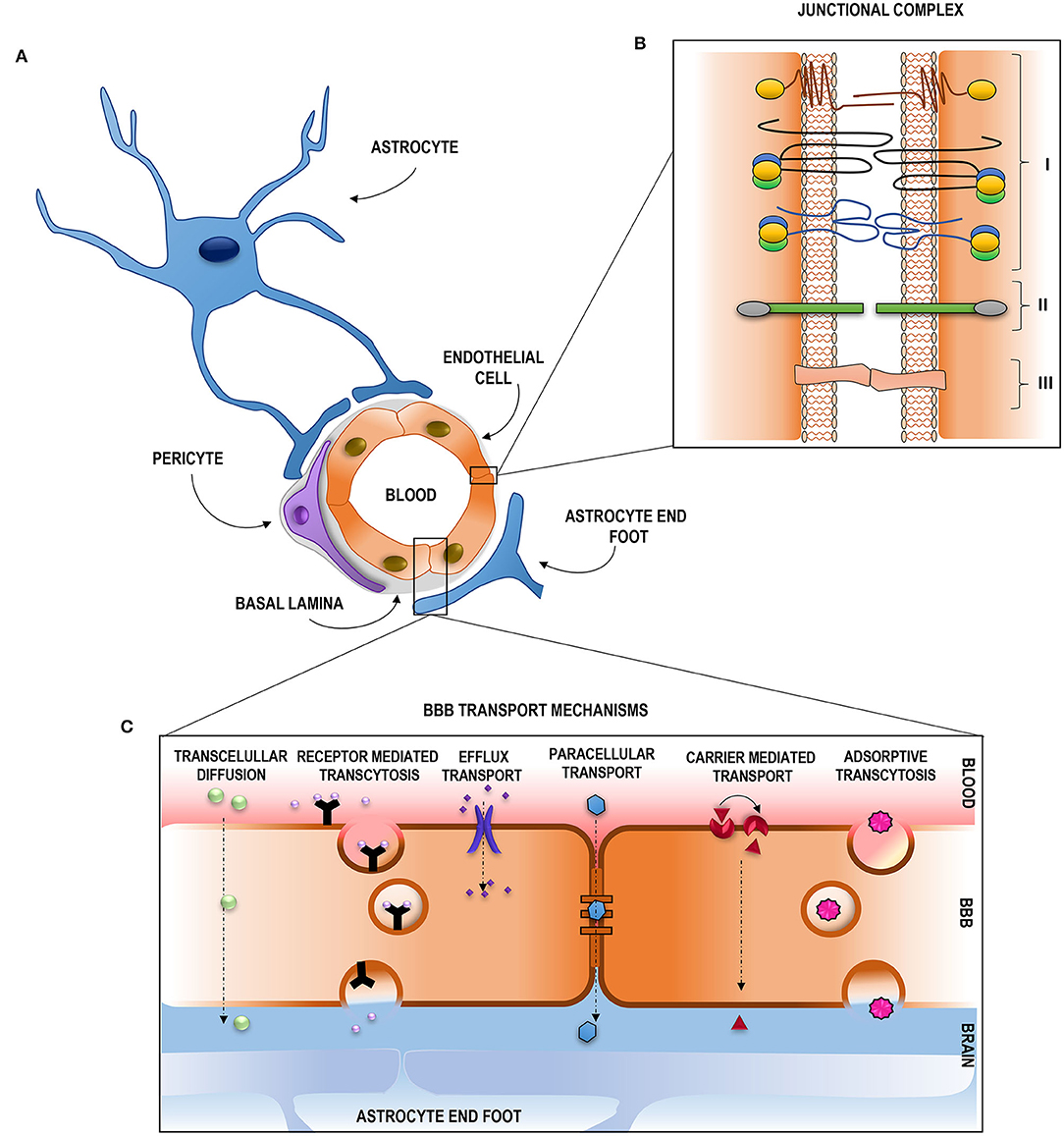
For years, scientists dismissed oral GABA supplements because they believed GABA couldn’t cross the blood-brain barrier (BBB)—the protective filter that shields your brain from substances in your bloodstream. This long-held assumption suggested taking GABA supplements was pointless since the compound couldn’t reach where it’s needed most. However, groundbreaking research from the past decade has challenged this view, revealing multiple pathways through which supplemental GABA might influence brain function.
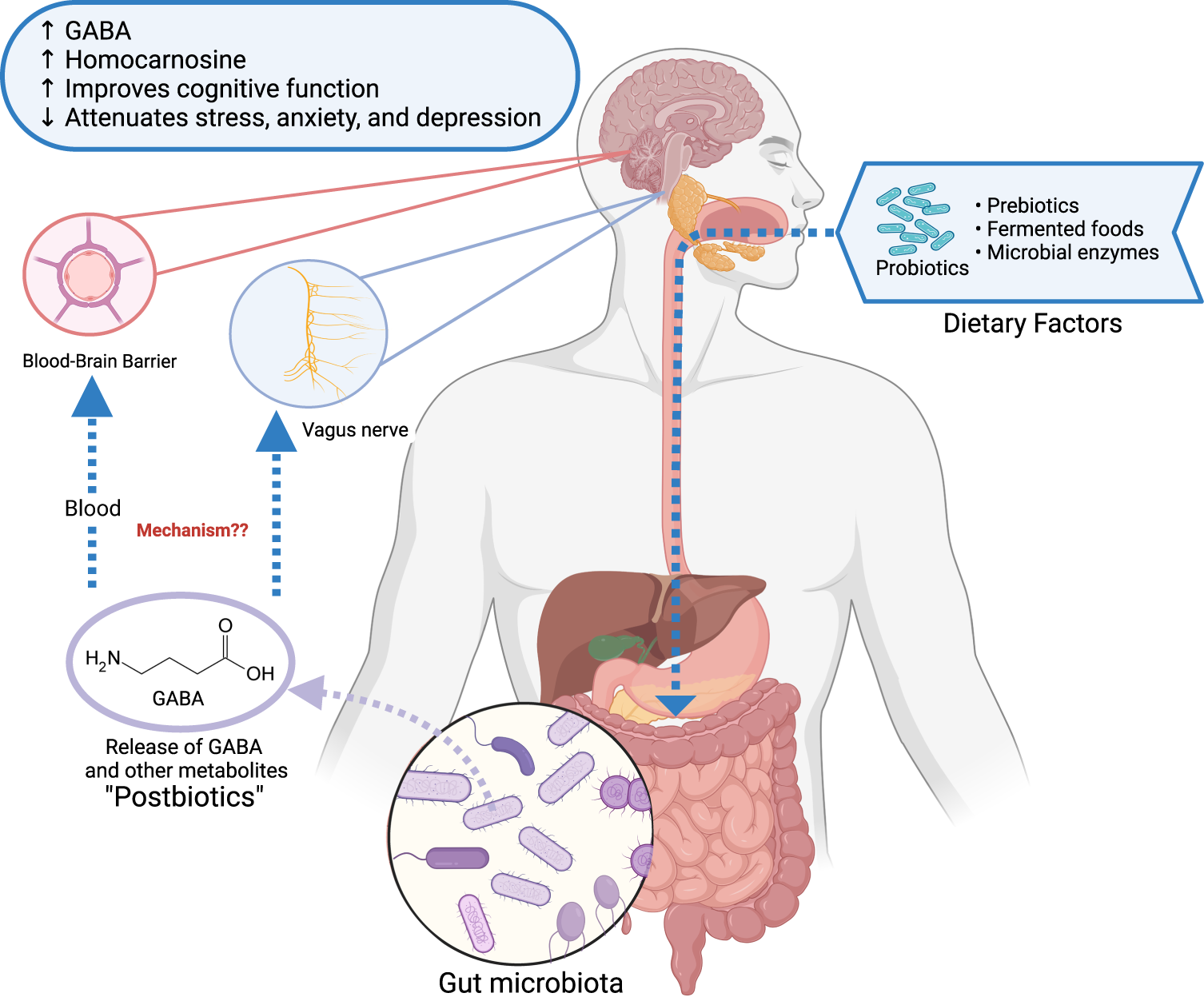
Recent EEG studies demonstrate measurable changes in brainwave activity within 30 minutes of taking GABA supplements. A 2006 study by Abdou and colleagues showed participants who consumed GABA exhibited increased alpha waves (associated with relaxation) and decreased beta waves (linked to anxiety). Similarly, Yamatsu’s 2016 research confirmed blood GABA levels peak approximately 30 minutes after ingestion, proving systemic absorption occurs. While direct measurements of brain GABA levels remain elusive, these findings suggest oral GABA either crosses the BBB through newly discovered transport mechanisms or works via the gut-brain axis.
What This Means for Your Supplement Routine
The timing of your GABA intake significantly impacts effectiveness:
– For stress relief: Take 30-60 minutes before anticipated stressful situations
– For sleep support: Consume 1 hour before bedtime to align with natural sleep onset
– For daytime calm: Consider smaller doses (100-200mg) to avoid drowsiness
– Avoid taking with high-protein meals which may compete with absorption
Reduce Stress Naturally: GABA’s Calming Effect Without Medication Side Effects
Unlike benzodiazepines that force GABA receptors to stay open longer (leading to dependency risks), supplemental GABA provides the raw material your brain needs to maintain healthy inhibitory signaling. A comprehensive systematic review of 14 placebo-controlled human trials found limited but promising evidence for GABA’s stress-reducing effects. Participants who took GABA supplements showed measurable improvements in both subjective stress reports and physiological markers like heart rate variability during challenging tasks.
The most compelling results emerged in studies using fermented GABA (produced by Lactobacillus strains), which demonstrated more consistent benefits than synthetic versions. In one notable experiment, participants facing a mentally stressful task who took 100mg of GABA recovered their baseline heart rate 20% faster than the placebo group. If you’ve tried other natural stress remedies without success, GABA supplementation could provide the missing piece in your anxiety management strategy—without the grogginess or dependency concerns of pharmaceutical options.
Maximize Stress Relief with These Proven Combinations
For enhanced results, pair GABA with:
– L-theanine (100-200mg): Boosts alpha brain waves for calm focus
– Magnesium glycinate (200-400mg): Supports GABA receptor function
– Ashwagandha (300-500mg): Reduces cortisol while enhancing GABA activity
– Deep breathing exercises: Activates the same neural pathways GABA targets
Improve Sleep Quality by Targeting Your Brain’s Natural Sleep Regulator

GABA’s influence on sleep architecture explains why many report deeper, more restorative rest after supplementation. By enhancing activity in the suprachiasmatic nucleus (your body’s master circadian clock), GABA helps regulate sleep-wake timing while promoting the transition into deep slow-wave sleep—the most physically restorative stage. Research shows people with insomnia often have 30% lower GABA levels in key brain regions compared to good sleepers, creating a biological basis for supplementation.
While the evidence for sleep benefits remains “very limited” according to systematic reviews, individual studies show promise. A 2018 trial found participants taking 300mg of GABA before bed fell asleep 5 minutes faster and reported 20% better sleep quality after one week. For those who’ve tried melatonin without success, GABA targets a different aspect of sleep regulation—calming the overactive mind that prevents sleep onset rather than resetting circadian timing.
Troubleshoot Common Sleep Supplement Failures
Many people give up on GABA for sleep because they:
– Take it too early (wait until 60 minutes before bed)
– Use insufficient dosage (try 200-300mg if 100mg doesn’t work)
– Combine with stimulants (avoid caffeine after 2pm)
– Expect immediate results (allow 7-10 days for full effects)
Avoid These 3 Critical GABA Supplement Mistakes
Even with high-quality GABA, common mistakes sabotage results. First, many take GABA with protein-rich meals that compete for absorption—always take GABA on an empty stomach for maximum bioavailability. Second, users often expect pharmaceutical-level results from natural supplementation; remember GABA works subtly to support your body’s existing systems rather than forcing dramatic changes. Finally, inconsistent timing undermines effectiveness—establish a routine by taking GABA at the same time daily to build optimal levels.
Quality matters significantly in GABA supplements. Many products contain synthetic GABA that may not match the structure of naturally occurring forms. Look for supplements specifying “fermented GABA” produced by strains like Lactobacillus brevis, which research shows generates GABA with superior bioactivity. Avoid products listing “GABA” without disclosing the production method—this often indicates cheaper synthetic versions with questionable efficacy.
Safety Profile: When GABA Works Best and Who Should Avoid It
GABA supplementation boasts an excellent safety record with no serious adverse events reported in clinical trials. Most users experience no side effects, though some report mild drowsiness or tingling sensations at higher doses (500mg+). The biggest advantage over prescription alternatives? No risk of dependency or withdrawal symptoms even with long-term use. However, certain groups should exercise caution:
- Pregnant or nursing women should consult doctors before use
- Those taking blood pressure medication may experience additive effects
- People with bipolar disorder should monitor mood carefully
- Individuals using sedative medications should avoid combining with GABA
For most adults, starting with 100-200mg daily provides noticeable benefits without side effects. Increase gradually to 300mg if needed, but higher doses rarely yield additional benefits and may cause excessive drowsiness.
Beyond Stress and Sleep: GABA’s Emerging Benefits for Memory and Pain
New research reveals GABA’s influence extends to cognitive function and pain perception. Optimal GABA-glutamate balance is crucial for memory consolidation—the process that transfers short-term memories to long-term storage. Preliminary studies suggest GABA supplementation might improve working memory in stressed individuals, though more research is needed. Similarly, GABA’s role as an inhibitory neurotransmitter in pain pathways explains why some chronic pain sufferers report relief with supplementation, particularly for tension-related headaches and muscle pain.
While these applications remain less studied than stress and sleep benefits, they highlight GABA’s systemic importance. If you’re already taking GABA for relaxation, you might notice unexpected improvements in mental clarity or reduced physical tension—a bonus effect worth tracking in your wellness journal.
Final Note: GABA supplementation offers a promising natural approach for stress and sleep support with minimal risks. While research continues to evolve, current evidence supports trying GABA if you struggle with anxiety, racing thoughts, or insomnia—especially when combined with complementary nutrients and healthy lifestyle habits. Start with 100-200mg daily, track your response for 2-3 weeks, and adjust timing and dosage based on your individual results. As science advances, we’ll gain clearer insights into who benefits most from this fundamental brain chemical, but for now, GABA represents a safe, accessible tool for enhancing your natural resilience to modern life’s demands.