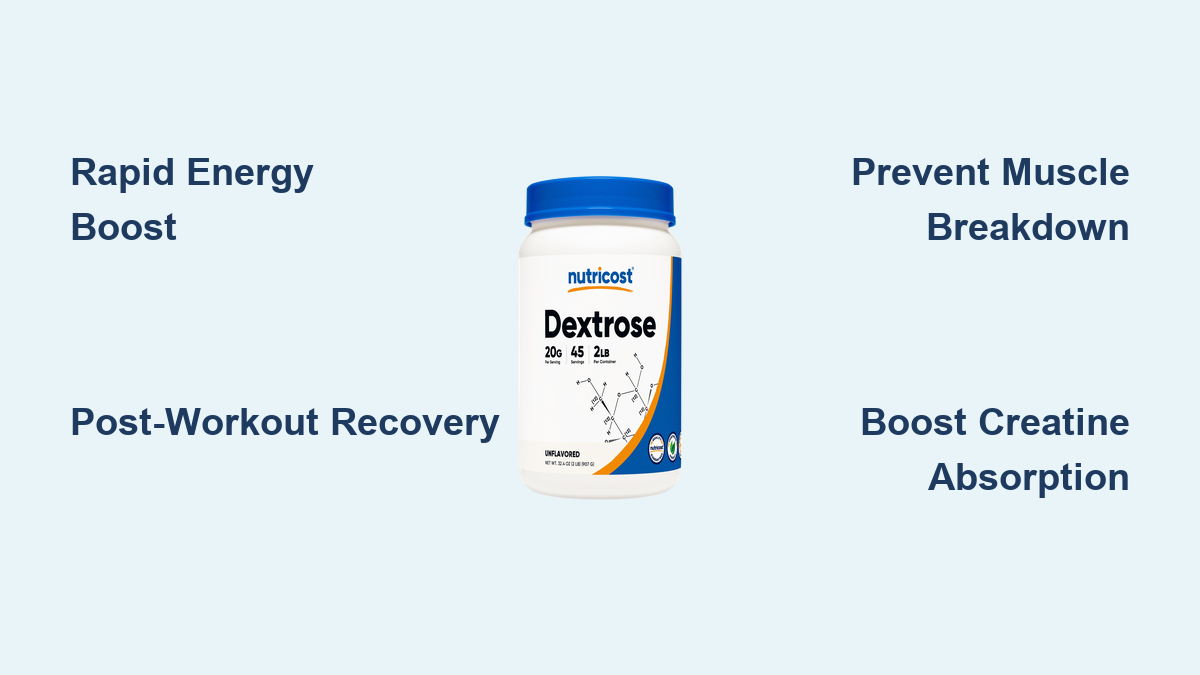

If your energy crashes mid-workout or you struggle to bounce back between training sessions, dextrose supplement benefits might be the missing piece in your fitness puzzle. This simple sugar—chemically identical to blood glucose—delivers rapid energy exactly when your body needs it most. Unlike complex carbohydrates that require digestion, dextrose bypasses this step entirely, flooding your system with immediate fuel that powers through plateaus and accelerates recovery. Whether you’re a weekend warrior or competitive athlete, understanding how to leverage dextrose’s unique properties can transform your training results while preventing muscle breakdown during intense efforts.
Why Dextrose Outperforms Other Sugars for Rapid Energy Needs
Dextrose (also called D-glucose) differs from table sugar in a crucial way—it requires zero digestion before your body can use it. While sucrose must be broken down into glucose and fructose, dextrose enters your bloodstream directly, triggering immediate energy production. This biochemical advantage explains why medical professionals use dextrose IVs to treat severe hypoglycemia and why elite athletes strategically time dextrose consumption around training. When you sip a dextrose solution 15 minutes before high-intensity intervals, you’re not just adding calories—you’re pre-loading your muscles with the exact fuel they burn during explosive efforts.
How Dextrose Creates an Energy Surge Within Minutes

The moment dextrose hits your stomach, it begins its rapid journey into your bloodstream. Within 5-10 minutes, you’ll notice enhanced mental clarity and physical readiness as blood glucose levels rise. This isn’t just placebo effect—dextrose has a glycemic index of 100, the highest possible rating, meaning it elevates blood sugar faster than any other carbohydrate. For athletes facing back-to-back training sessions, consuming 30-40g of dextrose immediately after your first workout can increase glycogen replenishment rates by up to 50% compared to waiting hours before eating. The key is timing: miss that critical 30-minute post-exercise window, and your recovery slows dramatically.
When Dextrose Beats Complex Carbs for Performance
Don’t make the common mistake of reaching for oatmeal before leg day—your body needs fast fuel for explosive efforts. During high-intensity training (anything above 75% of max effort), your muscles burn through stored glycogen at alarming rates. Complex carbs simply can’t keep pace with this demand. A 2022 study in the Journal of Sports Science found athletes consuming dextrose during 90-minute cycling sessions maintained power output 12% higher than those using maltodextrin (a slower-digesting carb). For practical application: mix 25g dextrose in 16oz water and sip during your last warm-up set to flood muscles with immediate energy reserves. You’ll feel the difference in your final reps.
Maximize Muscle Recovery with Post-Workout Dextrose Timing

The 20-minute window after your last set represents your body’s golden recovery period—when muscle cells are primed to absorb nutrients at maximum rates. Consuming dextrose during this phase does far more than just replenish glycogen; it triggers an insulin surge that shuttles amino acids into damaged muscle fibers 300% faster than at rest. This biochemical cascade explains why bodybuilders have used dextrose-protein shakes for decades—it’s not bro science but hard physiology.
Why 40g Dextrose + 25g Protein Creates Optimal Recovery
Research shows the ideal post-workout ratio isn’t what most commercial shakes provide. Instead of the typical 2:1 carb-to-protein ratio, recent studies indicate 40g dextrose paired with 25g whey protein creates the perfect insulin spike for recovery without excessive calories. Here’s exactly how to implement this:
1. Mix dextrose powder in cold water (it dissolves better than in shakes)
2. Add protein powder after dextrose has fully dissolved
3. Consume within 10 minutes of finishing your workout
4. Wait 60-90 minutes before eating solid food
This protocol prevents the common mistake of combining dextrose with fats or fiber, which would slow absorption and negate the rapid-recovery benefits.
How Dextrose Prevents Muscle Breakdown During Calorie Deficits
When cutting calories for fat loss, your body starts scavenging muscle tissue for glucose—a process called gluconeogenesis. Strategic dextrose use around workouts creates a protective effect: by providing immediate glucose, you signal to your body that muscle breakdown isn’t necessary. A practical application for physique athletes: consume 20g dextrose 15 minutes before fasted morning cardio. This small amount provides enough fuel for intense sessions while preserving hard-earned muscle—without derailing fat loss efforts.
Fix Low Blood Sugar Crashes Without Derailing Your Diet
For athletes prone to mid-workout dizziness or brain fog during intermittent fasting, dextrose offers a precision tool most overlook. Unlike fruit or juice—which contain fructose that must be converted to glucose—pure dextrose tablets deliver instant blood sugar correction without excess calories or digestive upset. This makes it invaluable for:
- Powerlifters needing quick energy between heavy sets
- CrossFitters experiencing “wall hits” during WODs
- Endurance athletes avoiding bonking during long sessions
Pro Tip: Keep 15g dextrose tablets in your gym bag. At the first sign of shakiness or mental fatigue, chew one tablet—blood glucose rises within 4 minutes, letting you finish strong without consuming unnecessary calories.
Boost Creatine and Nutrient Absorption by 60%

The insulin spike from dextrose does more than just shuttle glucose—it dramatically increases cellular uptake of other supplements. Research in the International Journal of Sport Nutrition found pairing creatine with dextrose increased muscle saturation by 60% compared to creatine alone. This isn’t just theory; it translates to real-world results:
- Creatine: Mix 5g creatine with 30g dextrose post-workout
- BCAAs: Add 10g dextrose to intra-workout BCAA drinks
- Electrolytes: Combine with dextrose for faster hydration
Many supplement companies hide this science behind proprietary blends, but you can recreate these synergistic effects yourself at a fraction of the cost.
Avoid These 3 Dextrose Mistakes That Cause Energy Crashes
Dextrose backfires when used incorrectly. Most users make these critical errors:
- Consuming dextrose on an empty stomach without activity → causes reactive hypoglycemia
- Mixing with high-fiber foods → slows absorption, negating benefits
- Using during low-intensity exercise → promotes fat storage instead of energy use
Fix: Only consume dextrose within 60 minutes of moderate-to-high intensity training. For low-intensity sessions, opt for slower-digesting carbs like sweet potatoes.
Choose Pharmaceutical-Grade Dextrose for Maximum Purity
Not all dextrose supplements deliver equal benefits. Most grocery store corn syrup contains fillers and impurities that slow absorption. For athletic performance, you need USP (United States Pharmacopeia) grade dextrose with these specifications:
- Minimum 99.5% purity
- No added starch or corn proteins
- Dissolves completely in cold water
- Neutral taste (not overly sweet)
Warning: Avoid products listing “corn syrup solids” as the primary ingredient—they contain maltodextrin and other slower-digesting carbs that won’t deliver the rapid benefits you need.
Optimal Dextrose Timing Protocol for Different Goals
Your training objectives determine precise dextrose usage:
For Strength Athletes
- Pre-workout: 20g 15 minutes before heavy lifts
- Intra-workout: 10g between sets of max-effort lifts
- Post-workout: 30g with protein immediately after
For Endurance Training
- During: 45-60g per hour in sports drink form
- Post-workout: 50g within 10 minutes of finishing
- Between sessions: 30g every 2 hours for multi-day events
For Fat Loss
- Pre-workout: 15g before fasted cardio
- Post-workout: 25g with protein to preserve muscle
- Never: Outside training windows (promotes fat storage)
Dextrose vs. Maltodextrin: Which Delivers Better Performance?

Many sports drinks use maltodextrin instead of dextrose—but this choice significantly impacts results. While maltodextrin provides sustained energy, dextrose delivers immediate power for explosive efforts. A 2023 study had cyclists complete 4×30-second sprints:
- Dextrose group: Maintained 98% power output on final sprint
- Maltodextrin group: Dropped to 89% power on final sprint
Verdict: Use dextrose for high-intensity efforts under 2 hours; switch to maltodextrin for ultra-endurance events.
Strategic Dextrose Use Preserves Muscle During Dieting
When calories drop below maintenance, your body starts breaking down muscle for glucose. Dextrose strategically timed around workouts prevents this catabolism without halting fat loss. A practical protocol for physique athletes:
- Morning cardio: 10g dextrose pre-session
- Weight training: 20g intra-workout
- Post-workout: 30g with protein
This provides just enough glucose to protect muscle while keeping you in a fat-burning state the rest of the day. Unlike whole food carbs, dextrose won’t interfere with intermittent fasting protocols when timed correctly.
Final Takeaway: Precision Dextrose Timing Beats Generic Carb Loading
Dextrose supplement benefits aren’t about adding more calories—they’re about delivering the right fuel at the exact moment your body needs it most. By consuming dextrose within 15 minutes before high-intensity efforts and immediately after training, you trigger biochemical processes that accelerate recovery, enhance performance, and protect muscle—without unnecessary fat gain. The key isn’t how much dextrose you consume, but precisely when you take it relative to your training. Start with 20g pre-workout and 30g post-workout, then adjust based on your energy levels and recovery speed. Within two weeks, you’ll notice improved workout performance and faster bounce-back between sessions—the real dextrose supplement benefits that transform training results.