
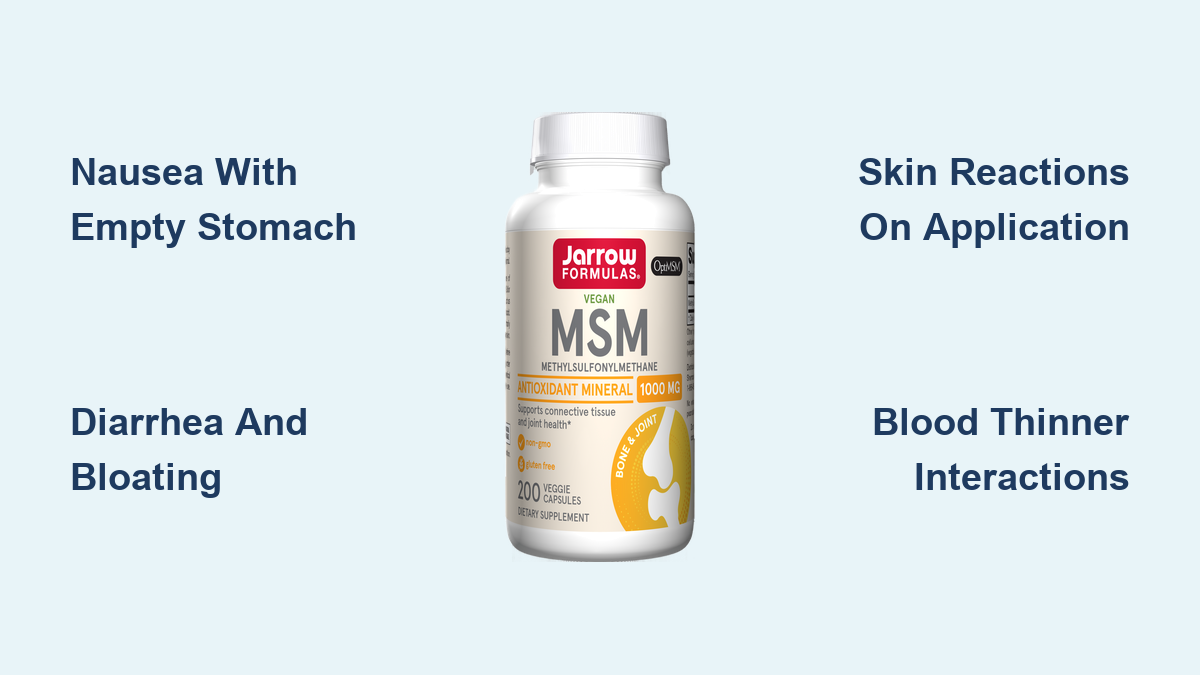

You’ve probably heard about MSM (methylsulfonylmethane) as a popular supplement for joint pain relief and overall wellness. This sulfur-containing compound has become a staple in many supplement regimens, with millions of people taking it daily to support joint health and reduce inflammation. But what happens when that supplement bottle doesn’t come with clear warnings about potential reactions? Many users discover uncomfortable gastrointestinal issues after their first dose or experience unexpected skin reactions from topical applications. Understanding the full spectrum of MSM dietary supplement side effects is crucial for anyone considering this popular compound, as even seemingly harmless supplements can cause adverse reactions in certain individuals.
Research shows that while MSM is generally well-tolerated, approximately 15-20% of users experience some form of side effect, particularly when first starting supplementation. This comprehensive safety guide cuts through the marketing claims to deliver evidence-based information about what you might experience when taking MSM, how to recognize serious reactions, and most importantly—how to use this supplement safely while minimizing risks to your health.
Common Gastrointestinal Reactions

When you start taking MSM supplements orally, your digestive system bears the initial impact, with symptoms often appearing within hours of your first dose. Understanding these common reactions helps you distinguish between normal adaptation and signs you should discontinue use.
Nausea and Stomach Discomfort Patterns
Nausea ranks as the most frequently reported MSM dietary supplement side effect, affecting nearly one in four new users according to clinical studies. This queasy sensation typically appears within 30-60 minutes after taking your first dose on an empty stomach. The sulfur content of MSM interacts with stomach acid, triggering this uncomfortable but usually temporary reaction. Many users describe an initial “sulfur burp” sensation accompanied by mild to moderate queasiness that subsides within a few hours.
The good news is that this nausea often diminishes after several days as your digestive system adapts. Starting with a conservative 500-1000 mg dose rather than jumping straight to the recommended 3-6 grams significantly reduces the likelihood of this reaction. Taking your MSM with a substantial meal—particularly one containing healthy fats—creates a protective barrier in your stomach that minimizes direct contact between the supplement and your stomach lining.
Diarrhea and Bloating Management Strategies
Diarrhea affects approximately 12% of new MSM users, typically developing within the first 48 hours of supplementation. This side effect usually lasts 1-3 days as your gut microbiome adjusts to the new compound. Unlike typical food-related diarrhea, MSM-induced episodes tend to be mild and resolve without intervention once your system adapts. Some users report accompanying gas and abdominal bloating that makes clothing feel uncomfortably tight.
To minimize these digestive disruptions:
– Begin with half the recommended dose for the first week
– Take your dose with a full glass of water
– Avoid combining with other supplements known to cause digestive upset
– Consider taking your dose with dinner rather than breakfast
– Stay well-hydrated throughout the day
If diarrhea persists beyond three days or becomes severe (more than four loose stools daily), discontinue use immediately and consult your healthcare provider.
Topical Application Hazards

MSM isn’t just taken orally—many users apply it topically in creams and lotions for joint pain relief. However, this delivery method carries unique risks that most product labels fail to adequately disclose.
Circulatory System Complications
If you have varicose veins or chronic venous insufficiency (CVI), applying MSM lotion to your legs creates a dangerous paradox: instead of reducing inflammation as expected, it can actually worsen swelling and pain. Clinical research demonstrates that topical MSM increases blood pooling in compromised veins, counteracting its intended anti-inflammatory effects. Users with CVI who apply MSM to their lower limbs often report increased heaviness in their legs, more pronounced vein visibility, and intensified aching within hours of application.
This reaction occurs because MSM’s vasodilatory properties interact negatively with already weakened vein valves. If you experience these symptoms after topical application, discontinue use immediately and elevate your legs. For those with circulatory conditions, oral MSM supplementation may be a safer alternative—but only after consulting your physician.
Skin Reaction Identification
Topical MSM products frequently contain additional ingredients like tea tree oil or hyaluronic acid, making it challenging to identify whether a reaction stems from MSM itself or other components. True MSM-related skin reactions typically appear within 15-30 minutes of application as localized redness, mild itching, or a temporary warming sensation at the application site.
More severe reactions—such as persistent hives, swelling, or blistering—likely indicate an allergy to another ingredient in the formulation. If you experience intense burning that doesn’t subside within 10 minutes, wash the area thoroughly with cool water and discontinue use. Patch testing new topical products on a small area of skin for 24 hours before full application can prevent widespread reactions.
High-Risk Groups That Should Avoid MSM

While most healthy adults tolerate MSM well, certain populations face significantly elevated risks that warrant complete avoidance or extreme caution.
Pregnancy and Breastfeeding Contraindications
No adequate safety studies exist on MSM use during pregnancy or while breastfeeding, creating an unacceptable risk profile for these vulnerable populations. The developing fetus and nursing infant lack established safety thresholds for sulfur compounds like MSM. During pregnancy—especially the critical first trimester when organ development occurs—introducing unproven supplements risks disrupting delicate developmental processes.
Breastfeeding mothers should similarly avoid MSM due to the unknown transfer rate into breast milk and potential effects on infant development. If you’re pregnant, planning pregnancy, or nursing, consult your OB/GYN before taking any supplement, including MSM.
Sulfur Sensitivity Warning Signs
Individuals with known sulfur sensitivities face potentially severe reactions to MSM. True sulfur allergies (distinct from sulfite or sulfate sensitivities) can trigger life-threatening anaphylaxis. Watch for these immediate reaction signs after taking MSM:
– Difficulty breathing or wheezing
– Swelling of lips, tongue, or throat
– Rapid heartbeat
– Sudden dizziness or fainting
– Widespread hives or rash
If you have a history of adverse reactions to sulfa drugs, sulfites in wine, or other sulfur-containing compounds, undergo allergy testing before trying MSM. Never take MSM if you’ve previously experienced allergic reactions to sulfur compounds.
Critical Drug Interaction Concerns
The potentially dangerous interaction between MSM and blood-thinning medications represents one of the most overlooked MSM dietary supplement side effects.
Blood Thinner Complications
MSM’s sulfur compounds may enhance the effects of anticoagulants like warfarin, apixaban, or clopidogrel. This interaction increases bleeding risk without users realizing their medication has become more potent. The danger lies in the delayed recognition—users might not connect unusual bruising or prolonged bleeding from minor cuts to their MSM supplementation.
If you take blood thinners, absolutely avoid MSM without explicit approval from your prescribing physician. If approved, expect more frequent INR monitoring to adjust your medication dosage accordingly. Never combine MSM with blood thinners without medical supervision.
Safe Usage Protocols
Following evidence-based protocols minimizes your risk of experiencing adverse MSM dietary supplement side effects while maximizing potential benefits.
Strategic Dosing Techniques
Start with 500-1000 mg daily for the first week, then gradually increase by 500 mg every 3-4 days until reaching your target dose (typically 1.5-3 grams daily for maintenance). This slow ramp-up allows your digestive system to adapt. Split your daily dose into two administrations—morning and evening—to maintain consistent blood levels while reducing gastrointestinal stress.
Take each dose with a meal containing healthy fats (avocado, olive oil, or nuts) to improve absorption and reduce stomach irritation. Consider taking your evening dose with dinner rather than breakfast if morning nausea occurs.
Quality Selection Criteria
Choose MSM supplements bearing third-party verification seals from NSF International, USP, or ConsumerLab. These certifications confirm product purity and accurate labeling. Avoid products with unnecessary fillers, artificial colors, or preservatives that increase reaction risks. Powder forms often provide better value and dosing flexibility, but capsules offer convenience for those sensitive to MSM’s slightly bitter taste.
When to Stop and Seek Medical Help
Recognizing these red flag symptoms means discontinuing MSM immediately and contacting your healthcare provider:
– Persistent diarrhea lasting more than 72 hours
– Blood in stool or black, tarry stools
– Difficulty breathing or swallowing
– Swelling of face, lips, or throat
– Unexplained bruising or prolonged bleeding
– Severe abdominal pain unrelieved by position changes
Final Safety Reminder: MSM dietary supplement side effects are generally mild and manageable when proper precautions are taken. By starting with low doses, monitoring your body’s response, and avoiding MSM if you belong to high-risk groups, you can safely determine whether this supplement supports your health goals. Always consult your healthcare provider before adding MSM to your regimen—especially if you take medications or have pre-existing health conditions. Your health is too valuable to gamble with unverified supplement use.