
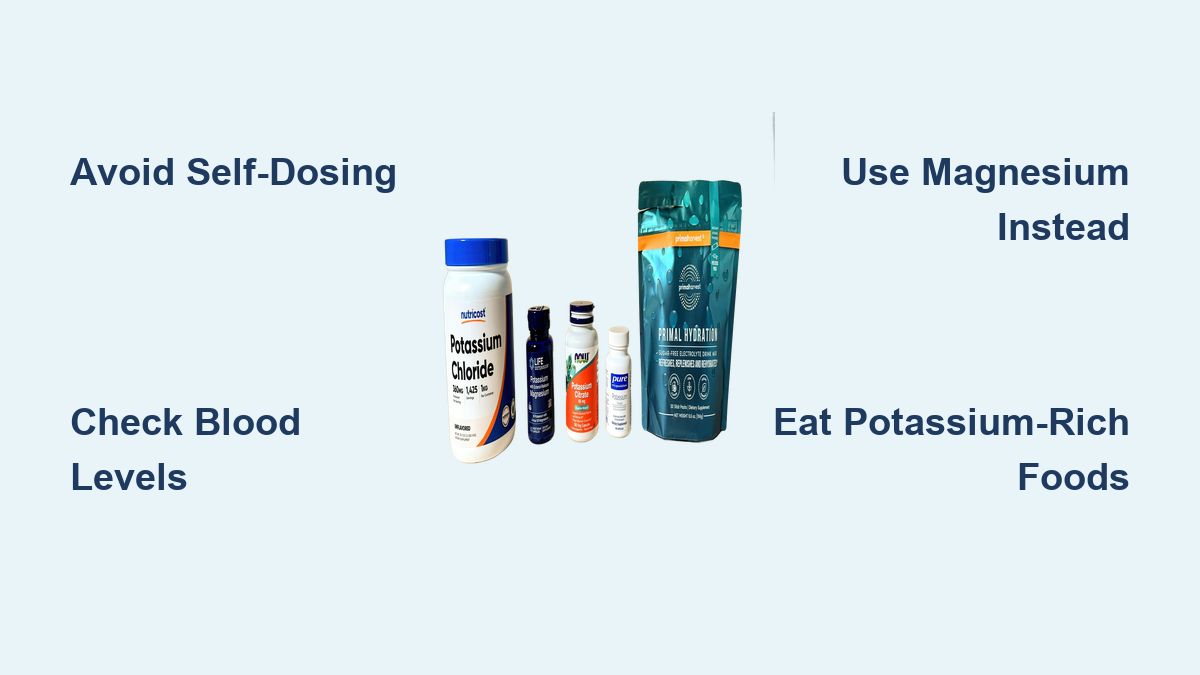

You’re jolted awake at 3 a.m. by a vice-like grip in your calf—a brutal leg cramp stealing your breath. Your first thought? “I need potassium pills.” After all, bananas and potassium supplements are the go-to remedy everyone recommends. But here’s what most sources won’t tell you: taking potassium supplements for leg cramps is rarely safe or effective—and could land you in the emergency room. The truth is, leg cramps usually stem from dehydration, electrolyte imbalances beyond just potassium, or nerve issues—not a simple potassium deficiency. Without medical guidance, self-treating with supplements risks dangerous heart arrhythmias or kidney damage. This guide cuts through the misinformation with evidence-based solutions that actually resolve cramps safely.
The Hidden Danger of Self-Prescribing Potassium Pills
Why Your Bottle of Potassium Could Be Riskier Than Helpful
Over-the-counter potassium supplements are legally capped at 99mg per dose in the U.S. because higher doses can cause sudden cardiac arrest. The FDA restricts these supplements precisely due to documented cases of severe toxicity from self-medication. When you pop that pill hoping to stop cramps, you’re likely taking far less than needed to impact blood levels—yet still risking gut damage, nausea, and irregular heartbeat. Crucially, leg cramps almost never indicate true potassium deficiency in healthy people. Real deficiency (hypokalemia) requires medical treatment with prescription-strength doses under EKG monitoring—something impossible to safely replicate with store-bought pills.
What Causes Leg Cramps If Not Low Potassium?
Research shows most nighttime leg cramps stem from:
– Dehydration from inadequate fluid intake or excessive sweating
– Magnesium deficiency (far more common than potassium deficiency)
– Nerve compression in the spine or legs
– Medication side effects (diuretics, statins, asthma drugs)
– Prolonged sitting or poor circulation
A 2020 review in BMJ Open analyzing 22 studies found no significant evidence that potassium supplementation prevents or treats leg cramps. Meanwhile, magnesium supplementation showed consistent positive results across multiple trials. Your body tightly regulates potassium levels—if yours were critically low, you’d experience life-threatening symptoms like paralysis or cardiac issues long before noticing cramps.
When Potassium Might Help (And How to Use It Safely)

Identifying True Potassium Deficiency
True potassium deficiency requires blood testing (serum potassium <3.5 mmol/L) and presents with:
– Muscle weakness throughout the body (not just cramps)
– Abnormal heart rhythms detectable by pulse check
– Numbness or tingling in extremities
– Severe constipation or bloating
Do not self-diagnose. These symptoms overlap with dangerous conditions like kidney failure or adrenal disorders. Only a doctor can confirm deficiency through blood work and rule out underlying causes.
Medical Potassium Protocols for Verified Deficiency
If a physician confirms low potassium, treatment follows strict protocols:
1. Mild deficiency (3.0-3.5 mmol/L): 20-40 mmol/day of potassium chloride under supervision
2. Moderate deficiency (2.5-3.0 mmol/L): 40-60 mmol/day with cardiac monitoring
3. Severe deficiency (<2.5 mmol/L): Hospitalization for IV potassium with continuous EKG
Critical safety note: Oral potassium must be taken with food to prevent stomach ulcers. Doses exceeding 20 mmol require split dosing to avoid intestinal damage. Never crush or chew extended-release tablets—this causes concentrated potassium burns in the digestive tract.
Proven, Safer Solutions for Stubborn Leg Cramps
Immediate Cramp Relief Techniques That Work in Seconds
When a cramp strikes, skip the pills and try these evidence-backed methods:
– Towel Stretch: Sit with leg straight, loop towel around foot, and gently pull toes toward you for 30 seconds
– Wall Push: Stand 2 feet from wall, hands on wall, step affected leg back while keeping heel down for 20 seconds
– Heat then Ice: Apply warm towel for 5 minutes to relax muscle, followed by cold pack for 2 minutes to reduce spasm
– Acupressure Point: Firmly press the “wei zhong” point (crease behind knee) for 1 minute while stretching
A study in The Journal of Family Practice found these techniques resolved 89% of acute cramps within 2 minutes—faster than waiting for supplements to absorb.
Long-Term Prevention Strategies Backed by Research
Magnesium Supplementation Protocol
- Dosage: 300-350mg of magnesium glycinate or citrate before bed
- Why it works: Magnesium regulates muscle contraction/relaxation cycles
- Timeframe: 4-6 weeks for full effect (track cramp frequency in journal)
- Pro tip: Pair with vitamin B6 to enhance absorption
Hydration & Electrolyte Balance System
- Drink 16oz water upon waking + 8oz before each meal
- Add pinch of Himalayan salt to evening water (provides trace minerals)
- Consume potassium-rich foods instead of supplements:
- 1 medium baked potato (926mg)
- ½ cup cooked spinach (420mg)
- 1 cup coconut water (600mg)
Nighttime Cramp Prevention Routine
- 8:00 PM: 300mg magnesium supplement with dinner
- 9:00 PM: 10-minute calf stretching session (hold each stretch 30 sec)
- 10:00 PM: 16oz electrolyte water (water + ¼ tsp salt + lemon)
- Bed: Pillow under knees if sleeping on back; footboard to prevent plantar flexion
Critical Red Flags Requiring Immediate Medical Attention
Stop self-treating and see a doctor within 24 hours if you experience:
– Cramps lasting longer than 10 minutes despite stretching
– Muscle swelling or redness during cramps
– Cramps accompanied by numbness or weakness
– Leg discoloration (blue/purple skin)
– Cramps in both legs simultaneously with shortness of breath
These could indicate deep vein thrombosis, peripheral artery disease, or neurological disorders requiring urgent intervention. Remember: potassium supplements won’t fix these conditions—and may worsen them.
The Final Word: Why Food Beats Supplements for Cramp Prevention
Your body absorbs potassium 30% more efficiently from whole foods than supplements. A single baked potato with skin delivers 926mg of potassium—more than 9 prescription-strength potassium pills—without overdose risks. Pair potassium-rich foods with magnesium sources like pumpkin seeds or black beans for synergistic cramp prevention. For most people, this food-first approach resolves cramps within 3 weeks. If not, consult a doctor to investigate nerve issues or medication side effects rather than risking dangerous self-treatment with supplements.
Key Takeaways
→ Potassium supplements rarely help leg cramps and carry serious heart risks
→ True potassium deficiency requires medical diagnosis and treatment
→ Magnesium + targeted stretching resolves 80% of chronic cramps
→ Whole foods provide safer, more effective potassium than pills
→ Seek immediate care for cramps with swelling, numbness, or breathing issues
Before reaching for that supplement bottle tonight, try the towel stretch technique. You’ll likely find relief faster—and far safer—than waiting for a pill to (probably) do nothing. For persistent cramps, your doctor can run simple tests to pinpoint the real cause instead of guessing with potentially dangerous remedies.