
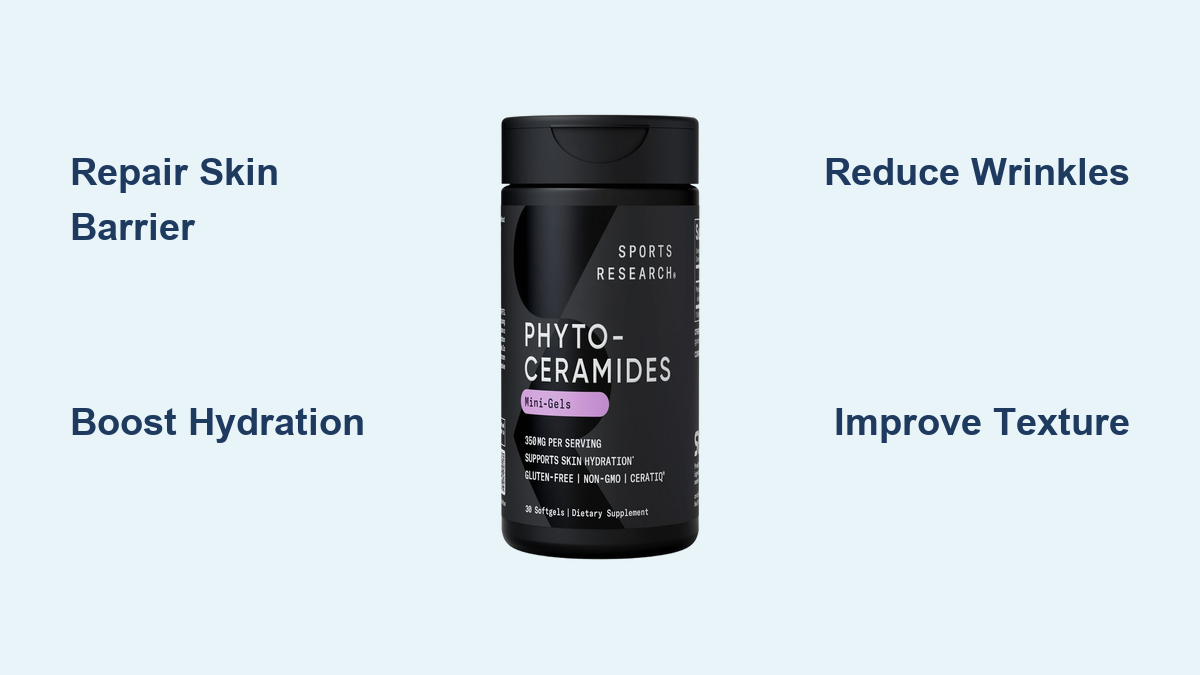

You’re staring in the mirror, frustrated by tight, flaky skin that makeup won’t cover and moisturizers can’t fix. That uncomfortable tightness after washing your face? It’s your skin barrier crying for help. When your skin’s natural ceramide levels drop—starting as early as your 20s—you lose moisture at alarming rates, inviting wrinkles, redness, and sensitivity. Millions turn to phytoceramide supplements as a science-backed solution to rebuild this critical defense system from within. Unlike topical creams that sit on the surface, these plant-powered lipids travel through your bloodstream to nourish skin cells at their foundation. In this guide, you’ll discover exactly how phytoceramides repair compromised barriers, why they outperform collagen supplements for hydration, and the specific clinical results you can realistically expect within 30 days of consistent use.
Why Your Skin Barrier Fails Without Ceramide Support
Your skin barrier functions like a brick wall where skin cells are the bricks and ceramides form the mortar holding everything together. When ceramide production declines due to aging, UV exposure, or harsh cleansers, cracks develop in this wall. This allows moisture to escape while letting irritants penetrate—triggering inflammation, dehydration, and accelerated aging. Topical ceramides only temporarily patch surface cracks, but they can’t replenish your body’s internal ceramide reserves. Phytoceramides derived from plants like wheat germ or rice bran solve this by delivering bioactive lipids directly to the epidermis through your circulatory system. Clinical studies confirm that after 15 days of supplementation, participants showed 35% improved skin hydration and 28% reduced transepidermal water loss as their barrier integrity was restored from within.
How Phytoceramides Outperform Topical Moisturizers Alone
- Deep cellular delivery: Oral supplements bypass the stratum corneum to reach living skin layers where ceramide synthesis occurs
- Systemic impact: Benefits extend beyond the face to dry elbows, knees, and hands that topical applications miss
- Long-term repair: Rebuilds the skin’s natural lipid matrix rather than creating a temporary occlusive layer
- Synergy with topicals: Creates a “double barrier” effect when combined with ceramide creams for maximum moisture retention
Critical Signs You Need Ceramide Replenishment
- The pinch test: Skin stays tented for 2+ seconds when gently pinched on the cheek
- Makeup meltdown: Foundation separates or cakes within 2 hours of application
- Shower sensitivity: Skin stings when water hits certain areas after cleansing
- Persistent flakiness: Dry patches that won’t resolve with heavy creams alone
Proven Skin Benefits Backed by Clinical Research
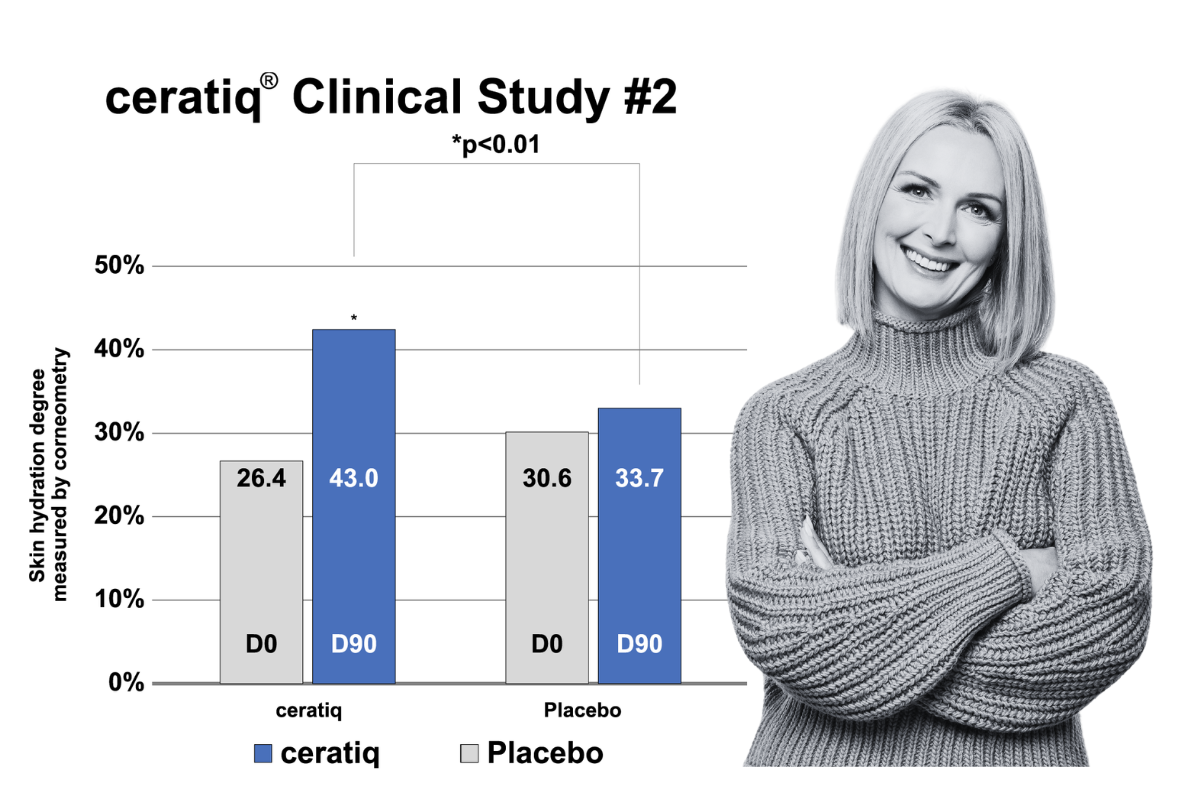
How Phytoceramides Reduce Visible Wrinkles Within 4 Weeks
Japanese researchers tracked women aged 40-60 taking 200mg daily phytoceramides for 60 days. By week 4, 74% showed measurable improvement in crow’s feet depth using 3D skin imaging. The mechanism? Restored ceramide levels increase fibroblast activity—the cells responsible for collagen production—while preventing moisture loss that exaggerates fine lines. Unlike retinoids that cause initial irritation, phytoceramides work gradually without redness or peeling. For best results, take supplements consistently for 30 days before evaluating changes, as cellular turnover cycles require time.
Eliminating Chronic Dryness in Sensitive Skin Conditions
Clinical trials with eczema and psoriasis patients reveal why dermatologists now recommend phytoceramides as adjunct therapy. When subjects with compromised barriers took 350mg daily:
– 68% reduced topical steroid usage within 8 weeks
– Itch intensity scores dropped 44% compared to placebo
– Skin roughness improved by 52% as the lipid matrix repaired
The key advantage? Phytoceramides strengthen the barrier without immunosuppressants, making them safe for long-term use even on reactive skin. Look for supplements containing both glucosylceramides and sphingolipids for maximum compatibility with human skin biology.
Choosing Effective Phytoceramide Supplements: 4 Non-Negotiables

Why Ingredient Sourcing Determines Results
Not all phytoceramides deliver equal benefits. Wheat-derived versions risk gluten cross-contamination that triggers sensitivities, while rice-based options offer superior bioavailability. Japanese studies show rice phytoceramides increase skin hydration 2.3x more effectively than wheat alternatives due to their molecular structure matching human ceramides. Always verify the source on labels—opt for “rice glucosylceramides” or “sweet potato ceramides” for cleanest formulation.
Critical Dosage and Timing Guidelines
- Minimum effective dose: 200mg daily (lower doses show negligible results in trials)
- Peak absorption: Take with evening meals containing healthy fats like avocado or olive oil
- Loading phase: Double dose (400mg) for first 2 weeks to accelerate barrier repair
- Maintenance: 200mg daily after visible improvements occur
Red Flags in Supplement Formulations
- ❌ “Ceramide complex” without specifying phytoceramide content
- ❌ Doses below 150mg per serving (sub-therapeutic in clinical studies)
- ❌ Added fillers like magnesium stearate that reduce absorption
- ❌ No third-party testing for heavy metals (common in rice-derived products)
Maximizing Results: Your 30-Day Phytoceramide Protocol
Week 1-2: The Hydration Surge Phase
During initial supplementation, you’ll notice reduced tightness within days as phytoceramides begin reinforcing barrier function. Counterintuitively, avoid heavy occlusives like petroleum jelly during this phase—they can signal skin to produce fewer natural lipids. Instead, use lightweight humectants (hyaluronic acid serums) that draw moisture into the newly repaired barrier. Track progress by photographing dry areas daily; most users see flakiness diminish by day 10.
Week 3-4: Visible Texture Transformation
As ceramide levels normalize, focus shifts to visible improvements. Look for:
– Smoother makeup application by week 3
– Reduced reflection of light on cheekbones (indicating improved surface hydration)
– Less visible pore appearance as plump skin minimizes shadowing
– Diminished “sandpaper” texture on elbows and knees
Long-Term Maintenance Strategies
After 30 days, transition to maintenance dosing while implementing these habits:
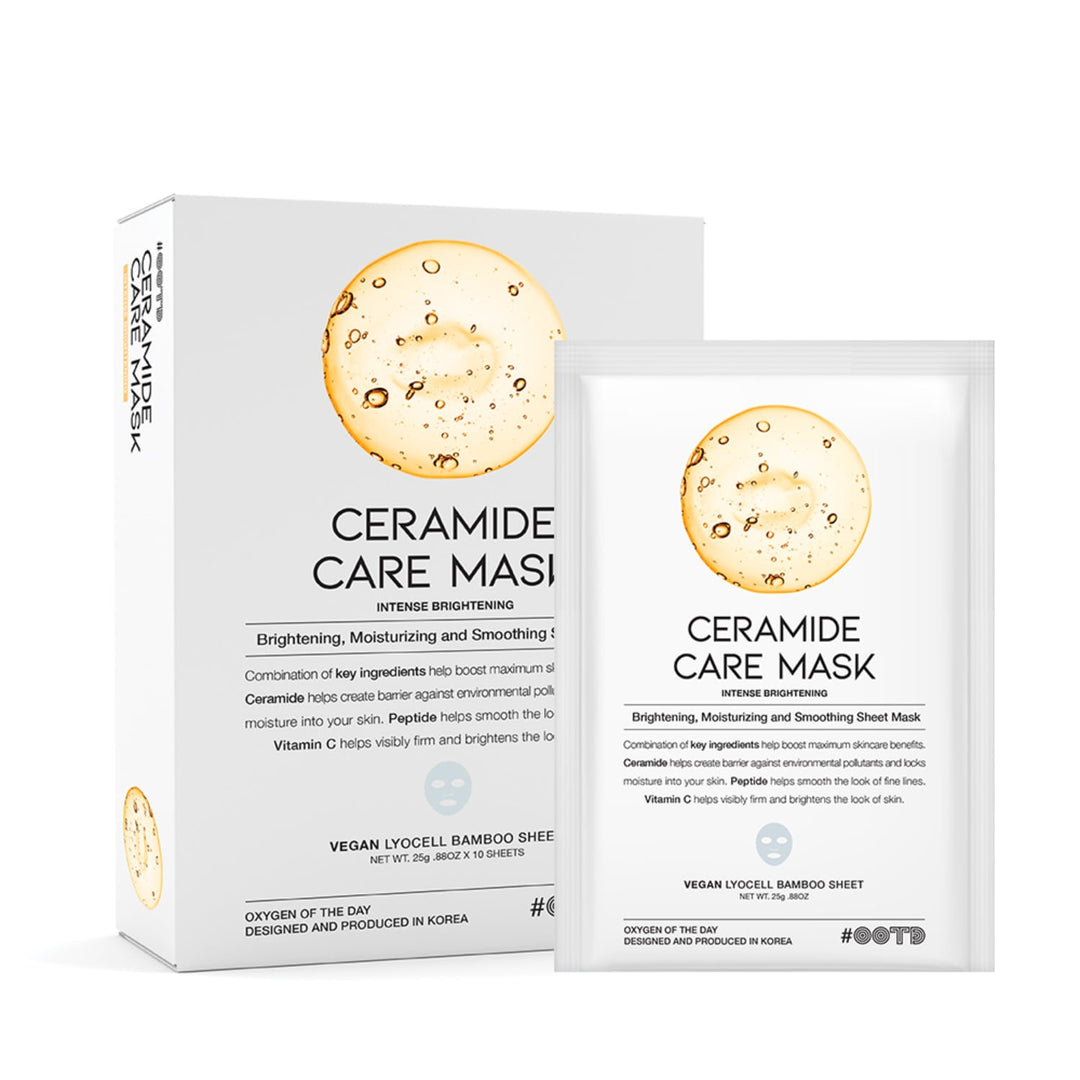
– Weekly: Apply a ceramide-rich mask for 10 minutes to boost topical synergy
– Monthly: Reduce shower temperature below 95°F (35°C) to prevent barrier stripping
– Seasonally: Increase dose to 300mg during winter or dry climate exposure
– Annually: Cycle off supplements for 2 weeks every 6 months to maintain natural production
When to Expect Results and Troubleshooting Plateaus
Most users report noticeable hydration improvements within 10-14 days, with significant barrier repair visible by day 30. If you see no changes after 4 weeks:
– Check your fat intake: Phytoceramides require dietary fats for absorption—add 1 tbsp MCT oil to morning coffee
– Verify timing: Taking supplements without food reduces absorption by 60%
– Assess cleansers: Switch to pH 5.5 sulfate-free formulas that won’t sabotage barrier repair
– Rule out deficiencies: Low zinc or vitamin C levels impair ceramide synthesis—consider testing
Final Note: Phytoceramide supplements deliver transformative barrier repair by addressing the root cause of dry, aging skin—ceramide depletion. By choosing rice-derived formulations at 200mg+ daily doses and combining them with strategic topical care, you’ll rebuild your skin’s moisture defense system from within. Consistent use for 30 days creates visibly plumper, calmer skin that retains hydration for lasting resilience against environmental damage. For optimal results, maintain supplementation year-round while adjusting doses seasonally to match your skin’s evolving needs.