
Many people take calcium supplements but never experience the bone-strengthening benefits they expect. The truth is, your body absorbs only 20-30% of calcium from supplements under average conditions—meaning most of what you swallow passes through your system without benefit. Understanding the best way to absorb calcium supplements transforms this inefficient process into one where your body actually utilizes the mineral you’re paying for. Whether you’re concerned about osteoporosis, muscle cramps, or general bone health, optimizing calcium absorption makes the difference between wasting money and building stronger bones.
If you’ve been taking calcium supplements without noticeable results, timing, form, and nutrient pairing are likely the culprits. Research confirms that calcium absorption isn’t just about swallowing a pill—it’s a complex process influenced by what you eat, when you take it, and which other nutrients you combine it with. The good news? You don’t need expensive specialty supplements to fix this. By implementing simple evidence-based strategies, you can dramatically increase how much calcium your body actually uses from your supplements.
This guide cuts through the confusion with specific, actionable steps to maximize calcium absorption. You’ll discover exactly when to take your supplements, which nutrients dramatically boost uptake, and common mistakes that sabotage your efforts—plus practical solutions you can implement today.
Why Calcium Absorption Varies So Much
Your body absorbs calcium differently based on multiple factors beyond simply swallowing a supplement. Children absorb 50-60% of dietary calcium to support growth, while adults over 50 may absorb only 15-20% due to declining stomach acid and hormonal changes. The form of calcium you choose directly impacts absorption rates—calcium carbonate requires stomach acid to dissolve properly and works best with food, while calcium citrate absorbs well regardless of stomach acid levels.
Age dramatically affects your calcium absorption capacity. As we age, stomach acid production decreases, making it harder to extract calcium from certain supplement forms. Post-menopausal women face additional challenges as declining estrogen levels accelerate bone loss while simultaneously reducing calcium absorption efficiency. If you’re over 50 or taking acid-reducing medications like PPIs, calcium citrate becomes particularly important since it doesn’t rely on stomach acid for absorption.
Which Calcium Form Matches Your Digestive Needs?
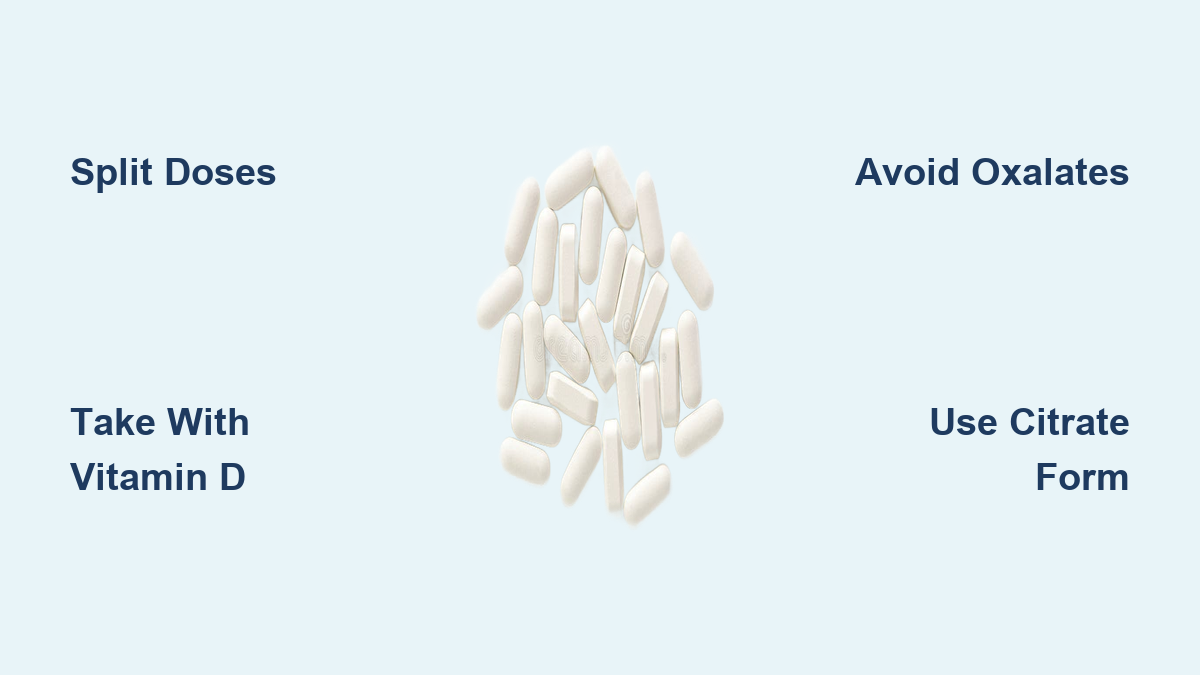
Calcium carbonate delivers the highest elemental calcium per dose (40%) at the lowest cost, but requires food and adequate stomach acid for proper absorption. If you experience gas or bloating with this form, you likely have insufficient stomach acid. Calcium citrate (21% elemental calcium) works without food or stomach acid, making it ideal for older adults and those on acid-reducing medications. Though you’ll need more pills for the same calcium dose, you’ll likely experience fewer digestive side effects.
How Dose Size Impacts Absorption Efficiency
Your intestines can only absorb about 500mg of calcium at a time, regardless of dosage size. Taking 1,000mg in one dose results in significantly lower overall absorption than splitting it into two 500mg doses. For optimal results, limit each dose to 500mg or less and space doses at least 4 hours apart—ideally with breakfast and dinner.
Optimal Timing for Maximum Absorption
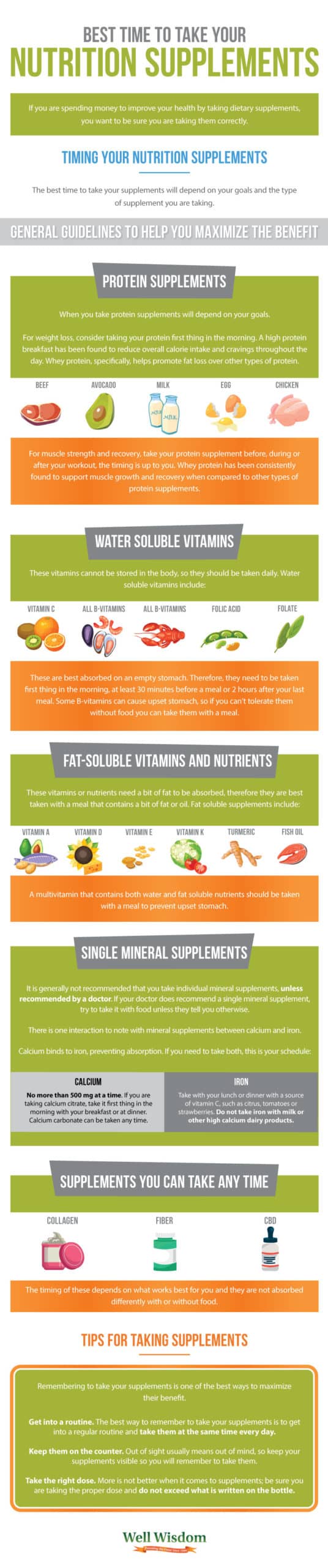
Taking calcium at the wrong time of day wastes money and delivers minimal benefits. Calcium carbonate must be taken with food to activate stomach acid for proper dissolution, while calcium citrate offers flexibility to take with or without meals. For most people, taking calcium supplements with your two largest meals creates the ideal absorption window while reducing digestive discomfort.
How to Schedule Multiple Doses Throughout the Day
Dividing your daily calcium intake into multiple smaller doses significantly boosts absorption. If you need 1,000mg daily, take 500mg with breakfast and another 500mg with dinner. Avoid taking calcium close to bedtime if you experience nighttime heartburn, as calcium carbonate can relax the lower esophageal sphincter. Those needing higher doses (1,500mg+) should consider three 500mg doses spaced throughout the day.
Timing Conflicts to Avoid
Certain medications and supplements interfere with calcium absorption when taken simultaneously. Iron supplements and zinc compete for the same absorption pathways—space these at least 2 hours apart from calcium. Thyroid medication requires an empty stomach for proper absorption, so take it first thing in the morning and wait 4 hours before your calcium dose. Antibiotics like tetracyclines bind to calcium and become ineffective—separate these by at least 2 hours.
Essential Nutrients That Enhance Calcium Uptake

Calcium doesn’t work alone, and pairing it with specific nutrients dramatically improves absorption and utilization. Vitamin D acts as calcium’s essential partner—without sufficient vitamin D, your body absorbs only 10-15% of calcium regardless of dose or timing. Many experts recommend maintaining blood vitamin D levels between 30-50 ng/mL for optimal calcium absorption, which often requires 600-2000 IU of vitamin D daily depending on baseline levels and sun exposure.
Vitamin D: The Calcium Absorption Gatekeeper
Vitamin D triggers the production of calbindin, the protein responsible for transporting calcium across the intestinal wall. Without adequate vitamin D, calcium simply passes through your system unabsorbed. Have your vitamin D levels tested annually, and supplement accordingly—many calcium supplements now include vitamin D to simplify this critical pairing.
Magnesium: The Unsung Calcium Partner
Magnesium deficiency impairs vitamin D activation, creating a chain reaction that reduces calcium absorption. Aim for a 2:1 calcium-to-magnesium ratio in your supplements (for example, 500mg calcium with 250mg magnesium). Take magnesium in the evening to support sleep while avoiding competition with calcium absorption.
Vitamin K2: The Calcium Traffic Director
Vitamin K2 ensures calcium goes to your bones rather than accumulating in soft tissues like arteries. This nutrient activates osteocalcin, the protein that binds calcium to bone matrix. Consider adding 90-120 mcg of vitamin K2 (MK-7 form) daily if you’re supplementing with calcium for bone health.
Foods and Beverages That Block Absorption
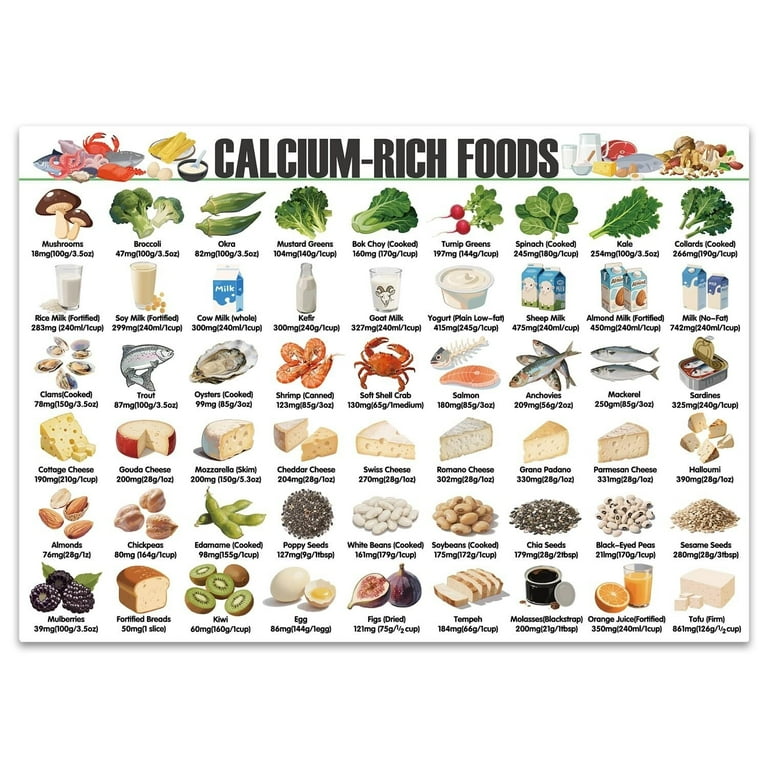
Certain everyday foods and drinks sabotage calcium absorption when consumed simultaneously with supplements. Spinach, rhubarb, and Swiss chard contain high levels of oxalates that bind to calcium, reducing absorption by up to 50%. Whole grains, beans, and nuts contain phytates that similarly inhibit calcium uptake. Coffee and soda increase calcium excretion through the kidneys—limit to 1-2 cups daily and avoid consuming within 2 hours of your calcium dose.
How to Work Around Absorption Blockers
Space calcium supplements at least 2-3 hours away from high-oxalate foods like spinach. Soak or sprout grains, nuts, and seeds before consumption to reduce phytate content. If you enjoy coffee with breakfast, take calcium carbonate with lunch instead of breakfast to avoid the interference. For those consuming high-fiber meals regularly, consider taking calcium citrate between meals rather than with food.
Common Mistakes That Reduce Calcium Absorption
Taking more than 500mg calcium at once represents the most common absorption mistake—your body simply can’t process it all. Another frequent error involves pairing calcium with high-fiber meals that contain absorption-inhibiting compounds. Some people take calcium supplements consistently but neglect vitamin D, rendering much of the calcium useless.
How to Fix Poor Absorption Immediately
Start by testing your vitamin D levels and supplementing to reach optimal range (30-50 ng/mL). Switch to calcium citrate if you’re over 50 or take acid-reducing medications. Divide doses to stay under 500mg per serving and take with appropriate meals based on your calcium form. Track your dietary calcium intake to avoid exceeding 2,500mg total daily (from food and supplements combined).
Building a Sustainable Calcium Supplementation Plan
Create a supplementation routine that fits your lifestyle for long-term success. If you consistently forget doses, pair calcium with an existing habit—take it with your morning coffee (if using citrate) or with dinner every night. Keep supplements visible on your kitchen counter rather than hidden in a medicine cabinet. Use a pill organizer to track doses and prevent missed or double doses.
How to Monitor Your Progress
Schedule bone density scans (DEXA) every 1-2 years if you’re at risk for osteoporosis. Request annual blood tests for calcium, vitamin D, and parathyroid hormone levels to ensure proper calcium metabolism. Pay attention to subtle signs of improved calcium status like reduced muscle cramps, stronger nails, and decreased bone pain during activity.
Special Considerations for Different Age Groups
Children absorb calcium efficiently but need adequate vitamin D from sun exposure or supplements for optimal bone building. Adults in their 20s-40s should focus on maintaining bone density through proper calcium intake and weight-bearing exercise. For adults over 50—especially post-menopausal women—higher calcium intake (1,200mg daily) combined with vitamin D becomes critical as absorption efficiency declines.
Calcium Needs During Pregnancy and Breastfeeding
Pregnant and nursing women require 1,000-1,300mg calcium daily. The body naturally increases calcium absorption during pregnancy, but maintaining adequate intake remains crucial for both mother and baby. Calcium citrate is generally better tolerated during pregnancy and doesn’t interfere with iron absorption like calcium carbonate can.
Final Tips for Maximum Calcium Absorption
Take calcium citrate if you have digestive issues or take acid-reducing medications. Never exceed 500mg per dose and space doses throughout the day. Pair calcium with vitamin D (at least 600 IU daily) and consider adding vitamin K2 for proper calcium direction. Avoid high-oxalate foods and caffeine within 2 hours of your supplement. Combine supplementation with weight-bearing exercise to direct calcium to your bones.
By implementing these specific strategies, you’ll transform your calcium supplementation from a wasted expense into an effective bone-strengthening protocol. Remember that consistency matters more than perfection—focus on getting the timing, form, and nutrient pairing right most of the time, and your bones will thank you for decades to come.