
Berberine has become one of the most researched natural compounds for metabolic health, with thousands of studies highlighting its benefits for blood sugar regulation, cholesterol management, and weight control. Yet many people waste their money on this powerful supplement simply because they don’t understand the best way to take berberine supplement. The truth is that berberine’s effectiveness depends almost entirely on how you incorporate it into your daily routine—getting the timing, dosage, and formulation wrong can reduce its benefits by up to 70%.
Unlike many supplements that work regardless of consumption method, berberine has notoriously poor bioavailability on its own, meaning your body struggles to absorb and utilize it effectively. This makes proper administration absolutely critical for anyone seeking real results. Whether you’re managing prediabetes, trying to improve lipid profiles, or simply optimizing metabolic function, implementing these evidence-based strategies will transform your berberine experience from “meh” to remarkable.
Optimal Dosing Schedule: Why Splitting Matters
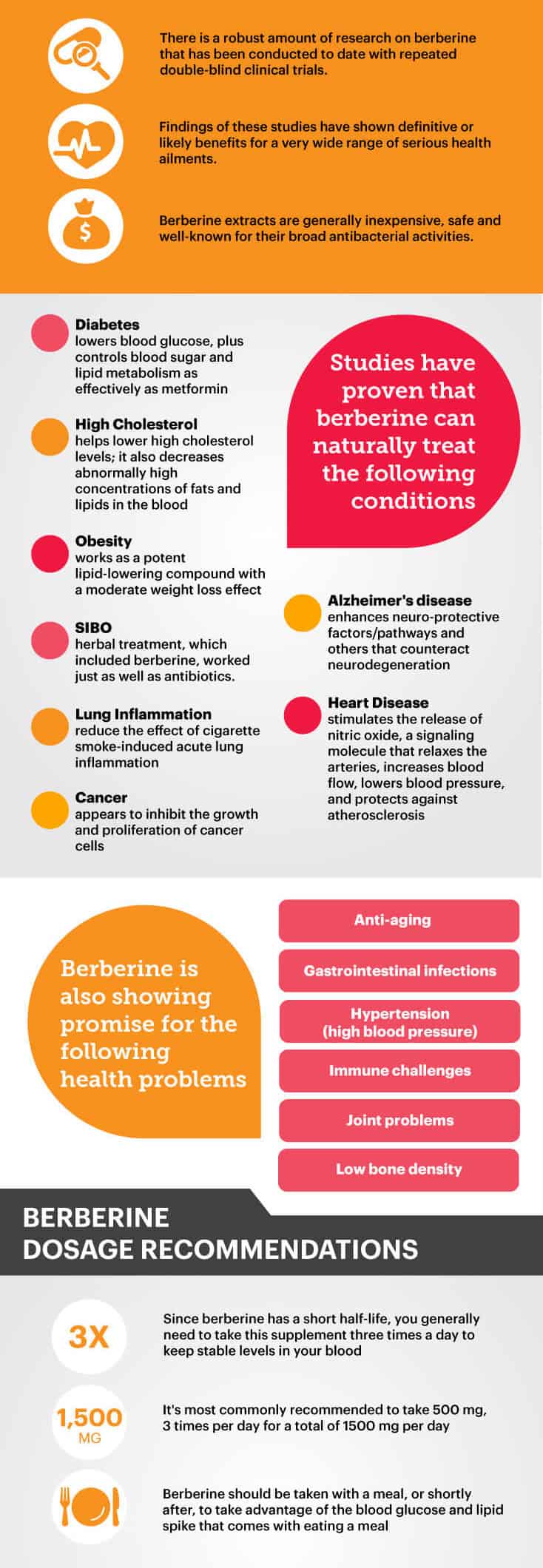
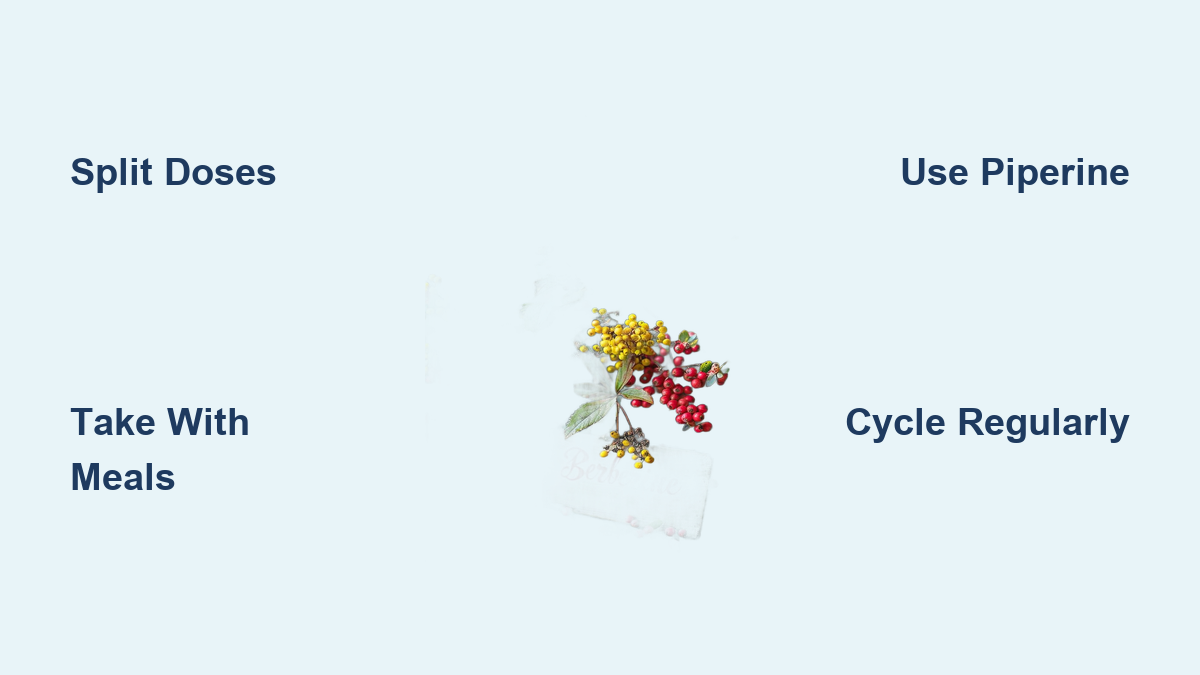
Taking berberine in divided doses throughout the day represents the single most important factor in maximizing its effectiveness. Berberine has a short half-life of just three to four hours, meaning it gets processed and eliminated from your system relatively quickly. When you take your entire daily dose at once, you create a spike-and-crash pattern that fails to maintain therapeutic blood levels consistently.
For most adults, the sweet spot sits between 900-1,500 mg daily, split into two or three separate 500 mg doses. If you choose twice-daily dosing, aim for approximately eight-hour intervals between doses (for example, 8 AM and 4 PM). For three-times-daily protocols, space doses five to six hours apart to maintain steadier blood concentrations. This consistent presence in your system allows berberine to continuously activate AMPK—the “metabolic master switch” responsible for many of its blood sugar and fat-burning benefits.
Critical timing tip: Always take berberine doses with your largest meals of the day. Research shows that taking berberine during or immediately after eating significantly enhances absorption while reducing common gastrointestinal side effects. The presence of dietary fats stimulates bile production, which is essential for properly absorbing this fat-soluble compound.
Meal Timing: The 30-Minute Window That Makes All the Difference
The question of whether to take berberine with food or on an empty stomach determines whether you’ll experience benefits or disappointment. Scientific evidence overwhelmingly supports taking berberine with meals for three compelling reasons:
First, berberine’s fat-soluble nature means it requires dietary fats for proper absorption. Taking it with meals containing healthy fats—like avocado, olive oil, or fatty fish—boosts bioavailability by more than 50% compared to low-fat meals or empty stomach consumption. Without adequate fats present, most of the berberine passes through your system unabsorbed.
Second, gastrointestinal side effects like cramping, nausea, and diarrhea affect up to 30% of users who take berberine on an empty stomach. These discomforts dramatically decrease when taken with food, which provides a protective buffer for your digestive tract.
Third, berberine works primarily on post-meal blood sugar regulation and lipid metabolism—processes that occur most actively during digestion. By timing your doses to coincide with meals, you align berberine’s peak activity with your body’s greatest metabolic demand.
The perfect timing strategy: Take each dose within 30 minutes before or during your main meals. For optimal blood sugar management, prioritize taking berberine before larger carbohydrate-containing meals. This positions the compound to immediately address post-meal glucose spikes when they begin.
Triple Your Absorption: Three Evidence-Based Enhancement Strategies

Simply taking berberine with food isn’t enough for maximum results. Implement these three clinically validated absorption boosters to dramatically increase how much berberine your body actually uses:
Piperine power: Adding 5-20 mg of piperine (black pepper extract) alongside berberine increases absorption by up to 30% by inhibiting liver enzymes that break down berberine before it enters your bloodstream. Many quality berberine supplements now include piperine specifically for this purpose—check your label for “BioPerine” or similar standardized extracts.
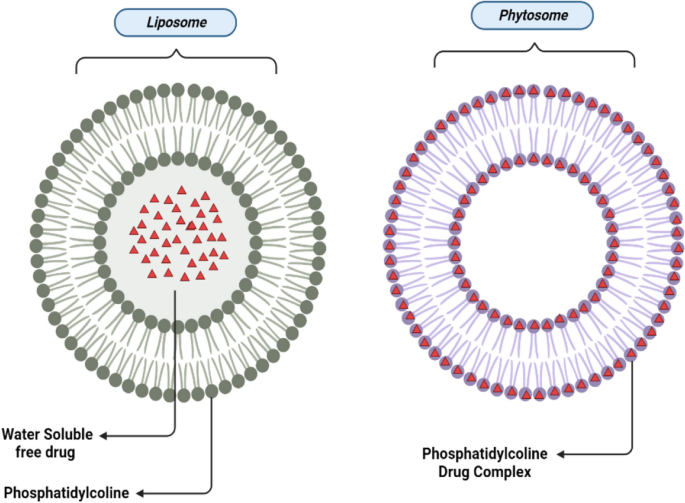
Fat-friendly formulations: Choose berberine products combined with healthy fats or delivered in softgels containing oils. Advanced options like berberine phytosome (bound to phosphatidylcholine) or liposomal berberine can double or triple absorption compared to standard powder forms. While these cost more upfront, you may achieve equal results with lower doses, making them potentially more cost-effective long-term.
Strategic dose splitting: Even within your meal schedule, proper spacing matters. Taking 500 mg doses at 8 AM, 1 PM, and 6 PM maintains steadier blood levels than taking 1,500 mg once daily. This consistent presence allows berberine to continuously support metabolic processes rather than providing brief, intermittent effects.
Cycling Protocols: Why Taking Breaks Boosts Long-Term Results
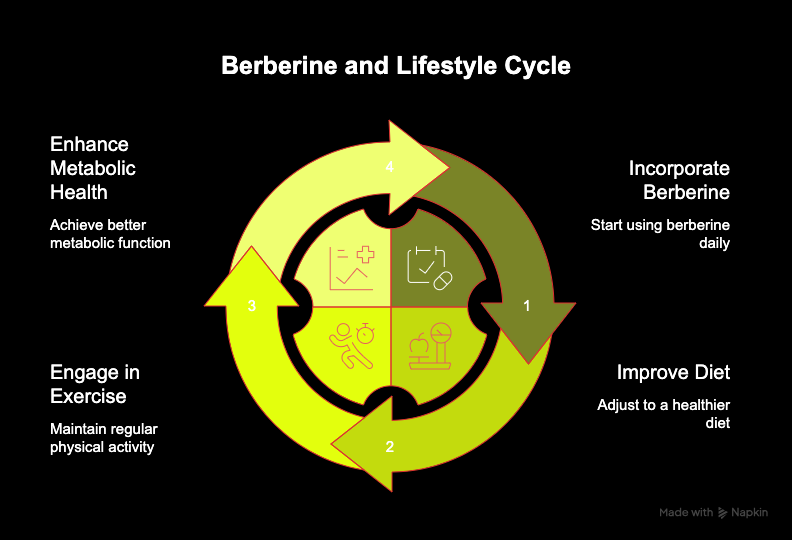
Unlike some supplements you can take indefinitely, berberine benefits from strategic cycling to maintain effectiveness. Continuous use beyond 8-12 weeks may lead to reduced responsiveness as your body adapts to its presence.
The most effective cycling approach involves taking berberine for 8-12 weeks followed by a 4-week break. During your break period, your metabolic improvements often persist while your system resets, allowing berberine to work more effectively when you restart. Many users report renewed benefits after cycling that weren’t apparent during continuous use.
Alternative cycling method: For sensitive individuals or those using higher doses, a 4-week on/1-week off cycle provides similar benefits with more frequent resets. During off weeks, consider supporting your metabolic health with complementary supplements like chromium, alpha-lipoic acid, or cinnamon extract to maintain progress.
Critical Safety Considerations Before Starting
Berberine’s powerful effects necessitate awareness of potential interactions, especially if you take medications:
Blood sugar medications: Berberine lowers blood glucose similarly to diabetes drugs like metformin. Combining them without medical supervision risks dangerous hypoglycemia. If you take diabetes medications, work with your healthcare provider to adjust dosages and monitor blood sugar closely.
Blood pressure medications: Berberine’s mild blood pressure-lowering effects can compound with antihypertensive drugs, potentially causing excessively low blood pressure. Monitor your readings carefully when combining these.
Common medications: Berberine inhibits several cytochrome P450 enzymes that process numerous drugs, potentially increasing blood levels of medications metabolized by CYP2D6, CYP3A4, and CYP2C9. Consult your pharmacist about potential interactions with your specific medications.
Pregnant or breastfeeding women should avoid berberine due to insufficient safety data and its ability to cross the placental barrier.
Formulation Matters: Choosing Between Standard, Phytosome, and Liposomal
Not all berberine supplements deliver equal results. Understanding these formulation differences helps you select the right product:
Standard berberine hydrochloride: The most affordable option (typically 500 mg capsules), but with bioavailability below 5%. Requires higher doses for effectiveness, making it suitable for budget-conscious users willing to take multiple capsules.
Berberine phytosome: Bound to phosphatidylcholine for 2-3x better absorption. Allows lower daily doses while achieving equal or superior blood levels. Worth the premium price for those seeking maximum value per dollar spent.
Liposomal berberine: Encapsulated in phospholipid vesicles for superior cellular uptake. Generally the most expensive option but potentially the most effective for hard-to-treat conditions. Look for products with verified particle size (under 200 nm).
When selecting any berberine product, prioritize third-party tested brands that provide certificates of analysis verifying purity and potency. Avoid products making exaggerated claims or priced significantly below market rates.
Managing Side Effects: Practical Solutions That Work
While generally well-tolerated, berberine can cause temporary side effects that often resolve with simple adjustments:
Gastrointestinal issues: Start with 250 mg once or twice daily for the first week, gradually increasing to full dose. Always take with food containing healthy fats. If problems persist, try a berberine phytosome formulation known for gentler digestion.
Headaches or fatigue: Ensure adequate hydration and maintain consistent blood sugar through balanced meals. These effects typically subside within 1-2 weeks as your body adapts.
Temperature sensitivity: Some users report feeling colder initially. Increase warm beverages, wear layers, and ensure adequate caloric intake to counteract this temporary effect.
If side effects continue beyond 3 weeks or significantly impact your daily life, consult your healthcare provider about alternative approaches.
Maximizing Results: The Lifestyle Synergy Factor
Berberine works best as part of a comprehensive metabolic health strategy:
Dietary synergy: Pair berberine with a low-glycemic, high-fiber eating pattern emphasizing non-starchy vegetables, quality protein, and healthy fats. This combination creates powerful synergy for blood sugar control.
Movement matters: Schedule 10-15 minutes of light activity (like walking) after meals to enhance berberine’s blood sugar-regulating effects. Both aerobic exercise and strength training amplify berberine’s metabolic benefits.
Sleep and stress: Prioritize 7-9 hours of quality sleep and implement stress-reduction techniques. Poor sleep and chronic stress impair insulin sensitivity, potentially counteracting berberine’s positive effects.
Consistency over months—not days—determines berberine’s ultimate success. Use pill organizers, phone reminders, or habit stacking (taking berberine with your morning coffee) to build reliable routines.
Taking berberine effectively transforms it from an expensive capsule to a powerful metabolic ally. By implementing these evidence-based strategies—taking divided doses with your largest meals, enhancing absorption with piperine and healthy fats, cycling strategically, and combining with supportive lifestyle practices—you’ll maximize every capsule’s potential. Start conservatively, track your response, and adjust based on your body’s feedback. Remember that berberine works best as part of a comprehensive approach to metabolic health, not as a standalone solution. When used properly, this remarkable natural compound can become one of your most valuable tools for long-term wellness.