
Collagen supplements dominate health aisles and social media feeds, promising smoother skin, stronger joints, and renewed vitality. Yet behind these glossy marketing claims lurk documented dangers that few consumers recognize before adding these products to their daily routine. While many tolerate collagen without issues, medical literature now confirms severe risks ranging from life-threatening skin reactions to dangerous hypersensitivity responses. A 30-year-old previously healthy woman recently landed in the hospital with Stevens-Johnson Syndrome after taking a marine collagen supplement—proving that “natural” doesn’t always mean “safe.” This alarming case represents just one documented danger in an industry operating with minimal regulatory oversight. Understanding these verified risks empowers you to make informed decisions about whether potential benefits outweigh documented dangers for your specific health profile.
The collagen supplement market continues expanding despite significant gaps in safety data, particularly regarding long-term effects and vulnerable populations. While manufacturers tout collagen as a miracle solution, healthcare providers increasingly encounter patients experiencing serious adverse reactions. This guide examines scientifically documented dangers drawn directly from medical case reports and clinical research—not speculation or fearmongering. You’ll discover specific warning signs to monitor, high-risk groups who should avoid collagen entirely, and practical steps to protect yourself if you choose supplementation. Knowledge is your best defense against preventable harm in today’s unregulated supplement landscape.
Life-Threatening Skin Reactions from Collagen Supplements

How Collagen Triggers Stevens-Johnson Syndrome
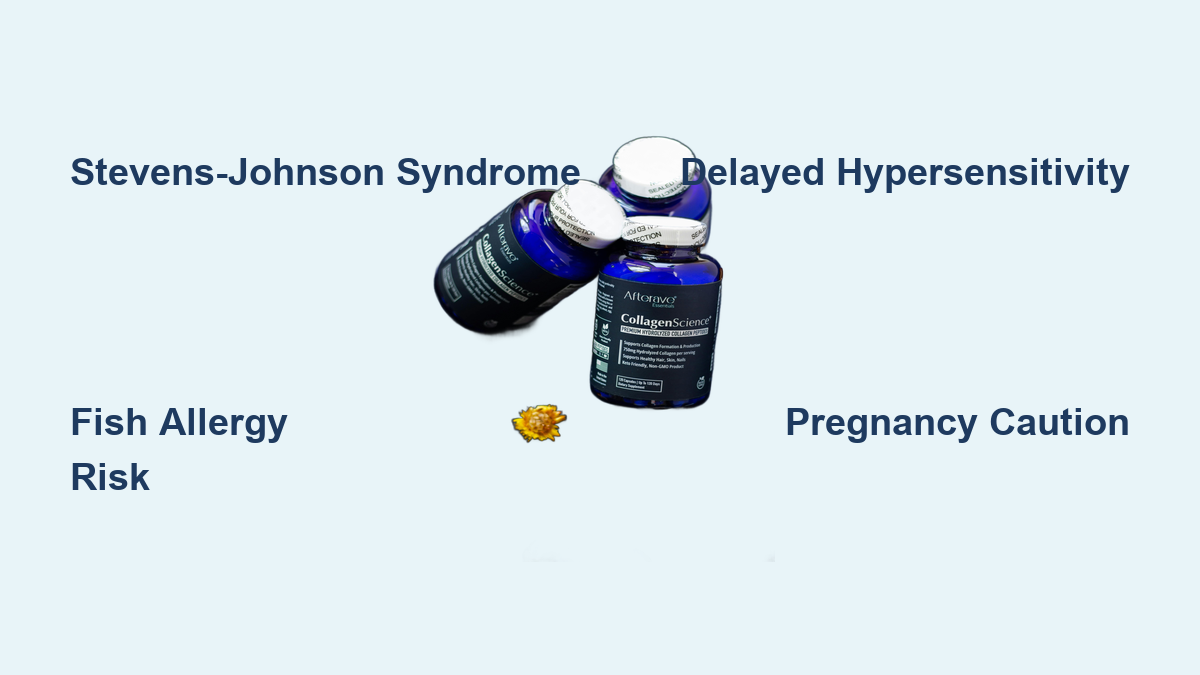
Medical literature now confirms collagen supplements can trigger Stevens-Johnson Syndrome (SJS) and Toxic Epidermal Necrolysis (TEN), two severe cutaneous reactions with mortality rates up to 30%. A documented case describes a healthy 30-year-old woman developing SJS/TEN overlap after one month of marine collagen supplementation. She presented with extensive painful violaceous skin rash, blisters covering 25% of her body, and severe mucosal damage affecting her mouth, eyes, and vaginal area. The critical warning sign was positive Nikolsky sign—where gentle pressure caused her skin to detach from underlying tissue, signaling catastrophic epidermal damage requiring immediate hospitalization.
This reaction followed a delayed pattern, appearing one week after she stopped taking the supplement, which complicates diagnosis as users often don’t connect symptoms to recent supplementation. Unlike milder rashes, SJS/TEN typically begins with fever and malaise before skin manifestations, creating a dangerous window where users might dismiss early symptoms. The marine collagen product contained additional ingredients like zinc and vitamin C, but researchers identified collagen as the likely culprit since these additives hadn’t previously caused similar delayed reactions. If you develop fever followed by a spreading rash after starting collagen, seek emergency care immediately—early intervention dramatically improves survival odds.
Recognizing Different Severe Skin Reactions
Not all dangerous skin reactions look identical, making accurate identification crucial for proper treatment. SJS/TEN features flat targetoid lesions and widespread mucosal involvement across three or more sites. Generalized bullous fixed drug eruption (GBFDE) typically shows similar earlier reactions in the same locations but lacks classic target lesions and affects fewer mucosal surfaces. Bullous erythema multiforme (BEM) presents with raised lesions without the initial fever and malaise characteristic of SJS/TEN. Your healthcare provider will assess these distinctions using diagnostic criteria including the SCORTEN scoring system that predicts survival probability based on clinical factors.
The key takeaway: any new widespread rash with blistering or mucosal involvement after starting collagen requires urgent medical evaluation. Don’t wait to see if it “clears up”—severe cutaneous reactions can progress rapidly within hours. Document exactly when symptoms began relative to your supplement use, as this timeline proves critical for accurate diagnosis and timely intervention.
Hidden Allergy Risks in Popular Collagen Products
Immediate Fish Collagen Allergies Explained
Marine collagen supplements pose particular danger for individuals with fish or shellfish allergies, despite marketing claims about “lower immunogenicity.” Research confirms fish-derived collagen contains thermostable proteins that trigger immediate IgE-mediated reactions in sensitive individuals. These reactions can occur within minutes to hours of consumption and include hives, swelling, breathing difficulties, and potentially fatal anaphylaxis. If you have any seafood allergy history, avoid marine collagen entirely—even products labeled “hypoallergenic” can provoke severe responses.
The danger extends beyond obvious fish allergies. Cross-reactivity means sensitization to one collagen source (like bovine) might trigger reactions to others (like marine). Start with minuscule test doses if you have any allergy history, and always carry epinephrine if prescribed by your allergist. Never assume “natural” equals “safe”—your immune system doesn’t distinguish between natural and synthetic threats.
Delayed Hypersensitivity You Won’t Expect
The SJS/TEN case demonstrates how collagen can trigger delayed hypersensitivity reactions appearing weeks after starting supplementation. Unlike immediate allergies, these develop through a two-phase process: initial exposure sensitizes your immune system, then subsequent doses trigger the severe reaction. This explains why users might feel fine for weeks before suddenly developing life-threatening symptoms. Medical professionals now urge heightened vigilance for delayed reactions, especially with marine collagen products.
Monitor for subtle warning signs during your first month of use: unexplained fatigue, mild skin irritation, or digestive changes could signal developing hypersensitivity. Discontinue immediately at the first sign of unusual symptoms and consult your healthcare provider before restarting. Remember—delayed reactions often worsen with each exposure, making early discontinuation critical.
Who Absolutely Should Avoid Collagen Supplements

High-Risk Groups Facing Serious Consequences
Certain individuals face dramatically elevated risks from collagen supplementation. Pregnant and breastfeeding women should avoid collagen entirely due to complete absence of safety data—researchers explicitly state there’s “not enough reliable information” to determine safety during these vulnerable periods. Collagen components could potentially cross into breast milk or affect fetal development, though specific mechanisms remain unstudied.
Individuals with autoimmune conditions, compromised immune systems, or taking immunosuppressant medications should also steer clear. The documented SJS/TEN case required treatment with cyclosporine and corticosteroids, which could dangerously interact with existing medications. If you have atopic dermatitis, multiple food allergies, or previous supplement reactions, consult an allergist before considering collagen—your risk profile may make even “mild” supplements potentially deadly.
Medication and Supplement Interaction Dangers
Collagen supplements frequently contain additional ingredients like vitamin C, zinc, and plant extracts that create complex interaction risks. The SJS/TEN case product contained nine additional components beyond collagen itself, making it difficult to pinpoint the exact trigger. These additives might interact with prescription medications or amplify collagen’s immunogenic effects in unpredictable ways.
Always provide your complete supplement and medication list to healthcare providers when seeking treatment for new symptoms. This information proves critical when diagnosing adverse reactions, as many doctors don’t routinely ask about supplements during initial evaluations. Never assume that because ingredients are “natural” they’re automatically safe to combine with your medications.
Practical Safety Strategies for Supplement Users

Recognizing Early Warning Signs
Learn to identify early indicators of serious reactions before they become life-threatening. Watch for these red flags during your first month of collagen use:
– Unexplained fever or flu-like symptoms
– Burning eyes or mouth sores developing alongside skin changes
– Skin that blisters or peels with minimal pressure
– Rapidly spreading rash with target-shaped lesions
– Difficulty swallowing or breathing
Don’t dismiss mild initial symptoms—SJS/TEN often begins with what seems like a minor illness before escalating rapidly. Track your supplement use in a journal noting exact start dates and any new symptoms, as this timeline helps doctors identify causative agents.
Making Informed Supplement Decisions
Before adding collagen to your regimen, weigh these evidence-based considerations:
– Consult your healthcare provider—especially if you have allergies, autoimmune conditions, or take medications
– Start with minimal doses—never jump straight to recommended serving sizes
– Choose single-ingredient formulas—avoid complex blends that obscure potential triggers
– Monitor for 4-6 weeks—delayed reactions often manifest during this window
– Discontinue immediately at first sign of unusual symptoms
The documented case of SJS/TEN in a previously healthy woman proves that severe reactions can strike anyone, regardless of prior health status or allergy history. While collagen supplements show relatively favorable short-term safety for most users at doses up to 10 grams daily for six months, the absence of long-term safety data and potential for catastrophic reactions demands appropriate caution.
Remember—the supplement industry operates with minimal regulatory oversight, meaning product contents often differ from label claims. Third-party testing verification provides some assurance, but cannot eliminate inherent biological risks like hypersensitivity. Your health decisions deserve evidence-based consideration, not marketing hype. When significant uncertainty exists about serious risks, the precautionary principle suggests erring on the side of avoidance—particularly for supplements offering marginal benefits at best for most users.