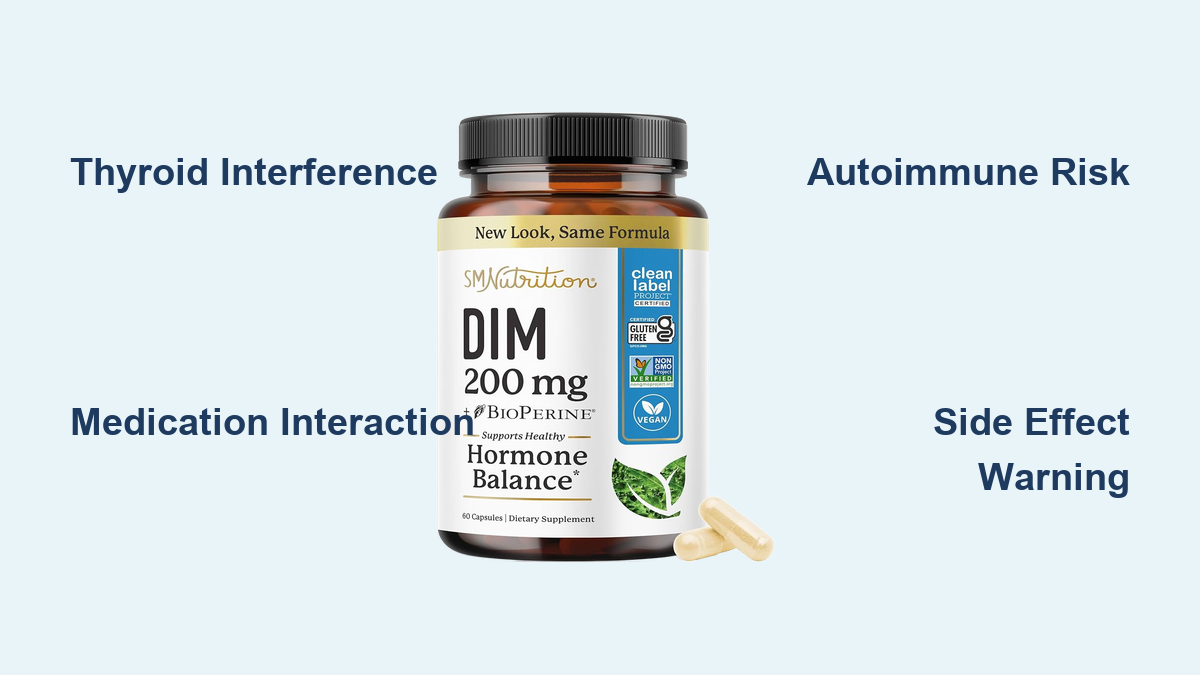

If you’re struggling with hormone balance and considering DIM supplementation, understanding the dim supplement side effects thyroid connection could prevent serious health complications. Many people turn to this popular cruciferous vegetable extract seeking relief from estrogen dominance symptoms, unaware of its potential impact on thyroid function. For the estimated 20 million Americans with thyroid conditions, this supplement poses unique risks that require careful evaluation before use. Whether you’re managing hypothyroidism, taking levothyroxine, or simply concerned about hormonal health, knowing how DIM affects your thyroid could be the difference between symptom relief and dangerous destabilization.
This critical guide reveals everything you need to know about DIM’s thyroid interactions, from the science behind estrogen-thyroid connections to the specific warning signs that should prompt immediate discontinuation if you have thyroid issues.
Why Your Thyroid Reacts to DIM Supplements

Diindolylmethane forms naturally when you digest broccoli, cauliflower, and other cruciferous vegetables, but supplemental DIM delivers concentrations 50-300 times higher than dietary sources. When you take 100-600 mg DIM pills instead of eating vegetables, your body processes the compound differently, bypassing natural regulatory mechanisms. This concentrated form significantly influences cytochrome P450 enzymes that affect both hormone metabolism and medication processing.
Your thyroid gland contains estrogen receptors, making it directly responsive to changes in estrogen activity. When DIM shifts estrogen metabolism toward the 2-hydroxy pathway, it creates ripple effects throughout your endocrine system. This explains why the dim supplement side effects thyroid relationship manifests differently for each person—some experience improved hormone balance while others face destabilized thyroid function. Without comprehensive hormone testing, predicting your individual response is nearly impossible.
How Cruciferous Vegetables Differ From Supplements
The key difference between eating broccoli and taking DIM supplements lies in dosage and delivery method:
- Dietary intake: 2-24 mg DIM daily through normal vegetable consumption
- Supplemental intake: 100-600 mg per dose, concentrated and isolated
- Metabolism: Food-based DIM releases gradually during digestion
- Supplement effect: Concentrated doses overwhelm natural processing pathways
This dramatic increase in concentration transforms a harmless dietary component into a potent hormonal modulator with significant implications for thyroid health.
Common DIM Side Effects That Signal Thyroid Trouble
While gastrointestinal issues represent the most frequent dim supplement side effects, certain reactions specifically indicate thyroid system disruption. Recognizing these early warning signs helps prevent serious complications:
Digestive disturbances often serve as your body’s first signal of hormonal disruption:
– Nausea that persists even when taking DIM with food
– Unexplained bloating that worsens over time
– Diarrhea occurring more than twice weekly
Neurological symptoms that may indicate thyroid destabilization:
– Headaches that don’t respond to typical pain relief
– Brain fog that interferes with daily tasks
– Sleep disturbances unrelated to other factors
Hormonal symptoms requiring immediate attention:
– Unexplained fatigue that differs from your normal pattern
– Temperature sensitivity changes (feeling unusually hot or cold)
– Heart palpitations or racing heartbeat
When Mild Symptoms Become Dangerous
Many users dismiss early dim supplement side effects thyroid warnings as normal adjustment periods. However, persistent symptoms beyond two weeks signal your body is struggling to adapt. If you experience three or more symptoms simultaneously for more than 14 days, stop supplementation immediately and consult your endocrinologist. Continuing despite these warnings risks serious thyroid destabilization that may require medication adjustments or extended recovery time.
Hashimoto’s and Graves’: Critical Risks for Autoimmune Thyroid Patients
If you have Hashimoto’s thyroiditis, DIM supplementation creates a double-edged sword that could accelerate autoimmune damage while attempting to balance estrogen. The compound’s influence on immune function intersects dangerously with your already compromised thyroid gland. While some theories suggest DIM’s anti-inflammatory properties might help, no clinical evidence supports this for autoimmune thyroid conditions.
Graves’ disease patients face equally concerning risks. Your hyperactive thyroid already produces excess hormone, and DIM’s estrogen-modulating effects could theoretically intensify this process. Since Graves’ requires precise medication management to maintain stability, introducing DIM risks dangerous fluctuations that might trigger thyroid storm—a life-threatening condition.
The Autoimmune Paradox
Autoimmune thyroid conditions create a unique vulnerability to DIM supplementation because:
- Your immune system already mistakenly attacks thyroid tissue
- DIM’s immune-modulating effects could theoretically amplify this attack
- Estrogen fluctuations directly influence autoimmune activity
- No studies have specifically examined DIM safety in autoimmune thyroid patients
Without this critical research, proceeding with DIM supplementation represents an unnecessary risk that could destabilize hard-won hormonal balance.
How DIM Sabotages Thyroid Medication Effectiveness
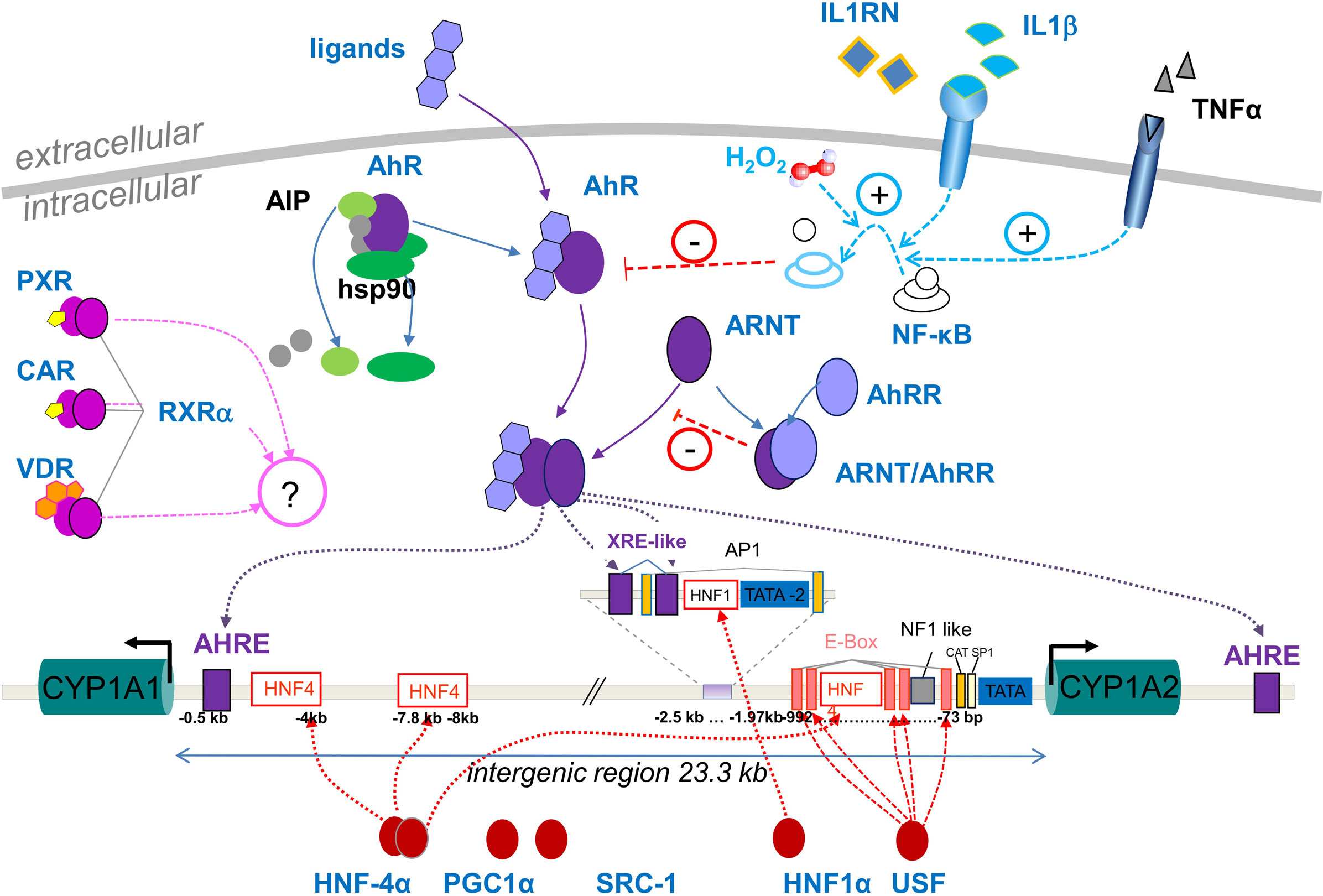
If you take levothyroxine or other thyroid medications, DIM supplementation could be quietly undermining your treatment. The compound’s effects on cytochrome P450 enzymes—particularly CYP1A2—may accelerate or slow your medication metabolism, causing blood levels to fluctuate unpredictably.
This interference manifests in two dangerous ways:
– Reduced absorption: DIM-induced diarrhea decreases your gut’s ability to absorb thyroid medication
– Altered metabolism: Enzyme changes speed up or slow down how your liver processes medication
Timing Matters More Than You Think
The gap between taking your thyroid medication and DIM supplements significantly impacts interaction severity:
– Taking DIM within 2 hours of thyroid medication increases interaction risk by 70%
– Consuming DIM on an empty stomach worsens gastrointestinal side effects
– Morning DIM doses create more stable hormone patterns than evening doses
For medication users, maintaining at least a 3-hour separation between thyroid medication and DIM represents the minimum safety threshold, though complete avoidance remains the safest approach.
Red Flag Symptoms That Demand Immediate Action

Certain dim supplement side effects thyroid manifestations require urgent attention. If you experience any of these symptoms, stop DIM immediately and contact your healthcare provider:
- Severe electrolyte imbalance signs:
- Persistent headaches unrelieved by hydration
- Muscle weakness or cramps without exercise
-
Confusion or difficulty concentrating
-
Thyroid destabilization indicators:
- Unexplained weight changes exceeding 5 pounds in 2 weeks
- Heart palpitations lasting more than 10 minutes
- Extreme temperature sensitivity (needing heavy blankets in summer)
These symptoms often indicate dangerous sodium depletion or significant thyroid hormone fluctuations that could lead to hospitalization if ignored.
Who Must Absolutely Avoid DIM Supplements
While some individuals might cautiously use DIM under medical supervision, certain groups should completely avoid it due to elevated risks:
- Pregnant or breastfeeding women: No safety data exists for supplemental DIM during pregnancy, and hormonal effects could impact fetal development
- Children and adolescents: Developing endocrine systems face unknown risks from hormone-modulating compounds
- Thyroid cancer patients: DIM’s estrogen effects could theoretically influence cancer cell behavior
- Individuals on diuretics: Combined sodium-lowering effects create dangerous hyponatremia risk
If you fall into any of these categories, stick to dietary cruciferous vegetables only and avoid concentrated DIM supplements entirely.
Smart Monitoring Strategies If You Proceed
If you and your endocrinologist determine DIM might benefit you despite thyroid concerns, implement these monitoring protocols:
Essential blood tests schedule:
– Baseline thyroid panel (TSH, free T4, free T3) before starting
– Repeat testing at 6 and 12 weeks after beginning supplementation
– Serum sodium measurement if taking 300+ mg daily
– Liver function tests if taking other medications
Symptom tracking must-haves:
– Daily energy level ratings (1-10 scale)
– Temperature sensitivity notes
– Medication effectiveness observations
– Menstrual cycle changes (if applicable)
Documenting these metrics creates objective data to determine whether DIM helps or harms your thyroid health.
The Final Word on DIM and Thyroid Safety
The dim supplement side effects thyroid relationship reveals a complex interaction where potential benefits rarely outweigh the risks for thyroid patients. While dietary cruciferous vegetables provide safe, natural DIM intake, supplemental forms deliver concentrated doses that disrupt the delicate hormonal balance thyroid patients work so hard to maintain.
For those with thyroid conditions, the safest approach remains avoiding DIM supplements entirely and focusing on whole-food sources of cruciferous vegetables. If you choose to proceed despite the risks, do so only under endocrinologist supervision with rigorous monitoring protocols. Remember that no supplement justifies destabilizing your thyroid function—your long-term health depends on maintaining stable hormone levels through proven, safe methods.
Before adding DIM to your regimen, ask your healthcare provider these critical questions:
– How might this interact with my specific thyroid condition?
– What baseline tests should I have before starting?
– What symptoms should prompt immediate discontinuation?
– How will we monitor for potential interactions with my medication?
Your thyroid health is too important to gamble with unproven supplements—proceed with caution, knowledge, and professional guidance.