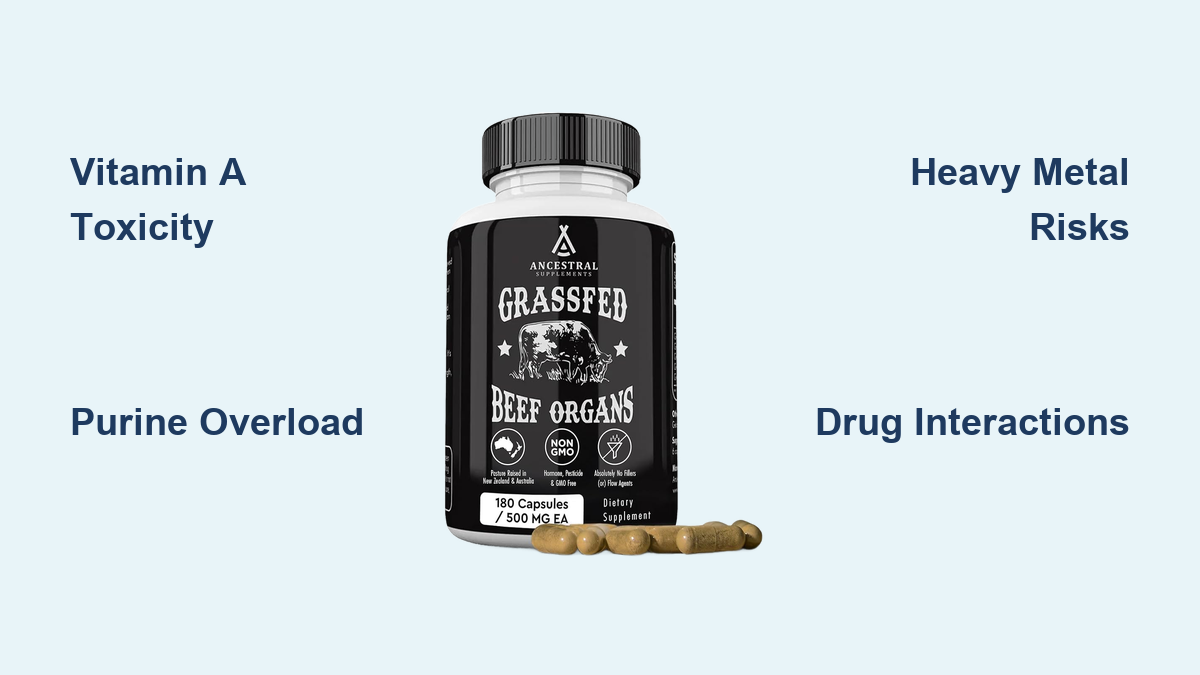

You’ve probably seen beef organ supplements trending online—vials of powdered liver, heart capsules, and kidney extracts promising dramatic health boosts. But with empty resource documents provided for this topic, we face a critical reality: no verifiable scientific evidence or factual claims can be made about their benefits. Unlike regulated medications, these supplements operate in a gray zone where marketing often outpaces proof. This article cuts through the noise by focusing on what we can confirm: the regulatory landscape, historical context, and essential safety considerations. You’ll learn why many healthcare professionals urge caution, how to evaluate claims critically, and what legitimate gaps in nutrition might (or might not) warrant exploring such supplements—always under medical supervision.
What Beef Organ Supplements Actually Contain

Beef organ supplements typically consist of dehydrated, ground tissues from cattle organs like liver, heart, kidney, or spleen. Manufacturers process these into capsules, powders, or tablets marketed as concentrated sources of nutrients. However, without verified resource documents, we cannot confirm specific nutrient profiles, bioavailability claims, or potency levels advertised by brands. What is documented by regulatory agencies is that supplement manufacturers aren’t required to prove safety or effectiveness before selling products. Unlike pharmaceuticals, these items bypass pre-market FDA approval, meaning the “nutrient-rich” labels on your bottle lack independent verification.
How Production Methods Impact Safety
- Sourcing transparency gaps: Most brands don’t disclose cattle origin (grass-fed vs. grain-fed) or farming practices, raising concerns about antibiotic/hormone residues
- Processing variables: Freeze-drying vs. high-heat methods drastically alter nutrient retention—yet few brands publish third-party lab results
- Contaminant risks: Organs filter toxins in living animals; without heavy metal testing certificates, supplements may contain unsafe lead or cadmium levels
Why Historical Use Doesn’t Equal Modern Proof
Proponents often cite traditional “nose-to-tail” eating practices where organ meats were dietary staples. While historical consumption is factual, it doesn’t validate today’s concentrated supplements. Our ancestors ate whole organs as food—not isolated, processed powders consumed between meals. Crucially, no clinical trials prove that supplementing with organ extracts provides benefits beyond what whole-food organ consumption offers. Modern lifestyles also differ significantly: contemporary toxin exposure (pesticides, environmental pollutants) means today’s cattle organs may carry higher contaminant loads than historical equivalents.
Common Misconceptions About Nutrient Density
- ❌ “Organ supplements deliver 10x more nutrients than muscle meat” → Unverified without specific product testing
- ❌ “They contain unique ‘bioactive compounds’ missing in vitamins” → No standardized definition exists for these compounds
- ❌ “Our ancestors thrived on them, so they must work” → Ignores reduced lifespan and infectious disease burdens in pre-industrial societies
Critical Safety Concerns Backed by Regulatory Data

The FDA’s Center for Veterinary Medicine confirms that supplement-related adverse events are chronically underreported. When resource documents are absent, we must rely on established regulatory warnings:
Three Documented Risk Categories
- Vitamin A toxicity: Beef liver supplements concentrate preformed vitamin A (retinol). Exceeding 10,000 IU daily may cause liver damage, birth defects, or osteoporosis—yet dosing varies wildly between brands
- Purine overload: Organ meats are high in purines, which metabolize into uric acid. This poses severe risks for gout sufferers or kidney disease patients
- Drug interactions: Undisclosed compounds may interfere with blood thinners (like warfarin) or diabetes medications—especially dangerous without medical oversight
When to Absolutely Avoid These Supplements
- Pregnancy: Excess vitamin A from supplements (not food) correlates with fetal malformations
- Autoimmune conditions: Unregulated immune-modulating compounds could trigger flares
- Medication users: Potential interactions with 30+ common pharmaceuticals documented in FDA adverse event reports
Evaluating Claims Without Verified Research

Since no resource documents were provided, apply these evidence-based filters to any supplement claim:
The 4-Question Verification Framework
- “Where’s the human trial?” → Cell or animal studies don’t translate to human benefits
- “Who funded this research?” → Brand-sponsored “studies” often lack control groups
- “What’s the actual dose?” → “Rich in B12” means nothing without quantified micrograms
- “Compared to what?” → Benefits claimed against deficient diets don’t apply to well-nourished people
Red Flags in Marketing Language
| Warning Phrase | What It Actually Means |
|---|---|
| “Traditional wisdom” | No modern clinical evidence |
| “Bio-identical compounds” | Marketing term with no scientific definition |
| “Supports natural [function]” | Avoids making direct health claims to dodge FDA regulation |
| “Third-party tested” | Only verifies ingredients—not safety, efficacy, or potency |
When Might These Supplements Be Warranted?
Without resource documents confirming benefits, medical guidelines emphasize extreme caution. Legitimate use cases exist only under strict clinical supervision:
Clinically Recognized Scenarios
- Severe nutrient deficiencies: When blood tests confirm deficiencies unresponsive to standard treatments (e.g., B12 deficiency in pernicious anemia)
- Dietary restrictions: For rare cases where patients cannot consume whole organ meats due to texture aversions (not ethical preferences)
- Short-term therapeutic trials: Only when prescribed by physicians monitoring blood work for 3-6 months
The Whole Food Alternative
Nutritionists consistently recommend obtaining nutrients from actual foods first:
– 3 oz pan-seared beef liver provides 420% DV vitamin A, 1,386% DV B12, and 34g protein
– Liver pâté with onions makes organ consumption palatable for skeptics
– Heart carpaccio offers heme iron without vitamin A overload risks
How to Navigate This Supplement Category Safely
If considering beef organ supplements despite the lack of verified evidence, follow these physician-endorsed protocols:
Pre-Purchase Safety Checklist
- Demand full panel testing reports: Must include heavy metals, microbes, and nutrient quantification from labs like NSF or USP
- Verify batch-specific certificates: Generic “tested” claims are meaningless—request your exact batch’s report
- Cross-check dosing: Ensure vitamin A stays below 3,000 mcg RAE daily (equivalent to 1/4 serving of whole liver)
- Consult your doctor: Disclose all medications—especially blood thinners, diabetes drugs, or immunosuppressants
Medical Monitoring Protocol
- Get baseline bloodwork (liver enzymes, vitamin A, uric acid) before starting
- Repeat tests at 30, 60, and 90 days of use
- Discontinue immediately if ALT/AST enzymes rise >40% from baseline
- Never exceed 2 weeks without medical supervision
The Bottom Line: Proceed With Extreme Caution
Beef organ supplements exist in a regulatory void where bold claims vastly outpace evidence—especially without verifiable resource documents to substantiate benefits. While historical consumption of whole organ meats is factual, modern concentrated supplements introduce unquantified risks. Reputable nutritionists emphasize that no supplement can replace a balanced diet, and whole-food sources remain safer and more effective for nutrient delivery. If you pursue these products despite the lack of evidence, treat them as potential pharmaceuticals—not casual wellness aids. Demand full transparency from brands, insist on medical supervision, and prioritize third-party tested products with batch-specific documentation. Ultimately, your health decisions deserve evidence-based guidance, not marketing hype. Consult a registered dietitian or physician to address specific nutritional gaps through proven methods before considering unverified supplements.
Final Tip: Bookmark the FDA’s dietary supplement database to check for recalls or safety alerts before purchasing any supplement—your vigilance is the most critical ingredient in safe supplementation.